
 By
By The intersection of traditional finance and blockchain technology is creating unprecedented opportunities for investors. Real World Assets (RWA) crypto represents one of the most significant developments in the digital asset space, bridging the gap between conventional investments and the efficiency of blockchain. With the European Union’s MiCA regulation now in effect and institutional interest surging, RWA tokenization is poised to transform how investors access everything from real estate to treasury bills. This guide provides everything you need to understand this emerging asset class and how to incorporate it into your investment strategy.
📊 STATS
• The RWA crypto market reached $15.2 billion in total value locked by late 2024
• 87% of institutional investors express interest in tokenized real-world assets
• The tokenized real estate market alone is projected to reach $1.6 trillion by 2030
• Germany ranks #2 in Europe for crypto adoption with €56 billion in crypto holdings
• RWA tokens have delivered average yields of 6-12% compared to 3-5% for traditional equivalents
Key Takeaways
• RWA crypto tokenizes physical assets like real estate, commodities, and bonds onto blockchain networks
• MiCA regulation provides clear legal framework making Germany an ideal market for RWA investments
• Benefits include 24/7 liquidity, fractional ownership, and transparent verification
• Risks include regulatory uncertainty, asset valuation challenges, and counterparty risk
• Getting started requires self-custody wallets, reputable exchanges, and understanding of due diligence
What Are Real World Assets in Crypto?
Real World Assets in crypto refer to tangible or traditional financial assets that have been digitized through tokenization on blockchain networks. These assets maintain intrinsic value from their physical or traditional financial counterparts while gaining the advantages of blockchain technology—including programmability, fractional ownership, and around-the-clock trading capabilities.
The fundamental premise is straightforward: instead of purchasing an entire property, artwork collection, or business loan portfolio, investors can buy tokenized fractions representing ownership stakes. These tokens trade on specialized platforms and can be transferred peer-to-peer without traditional intermediaries.
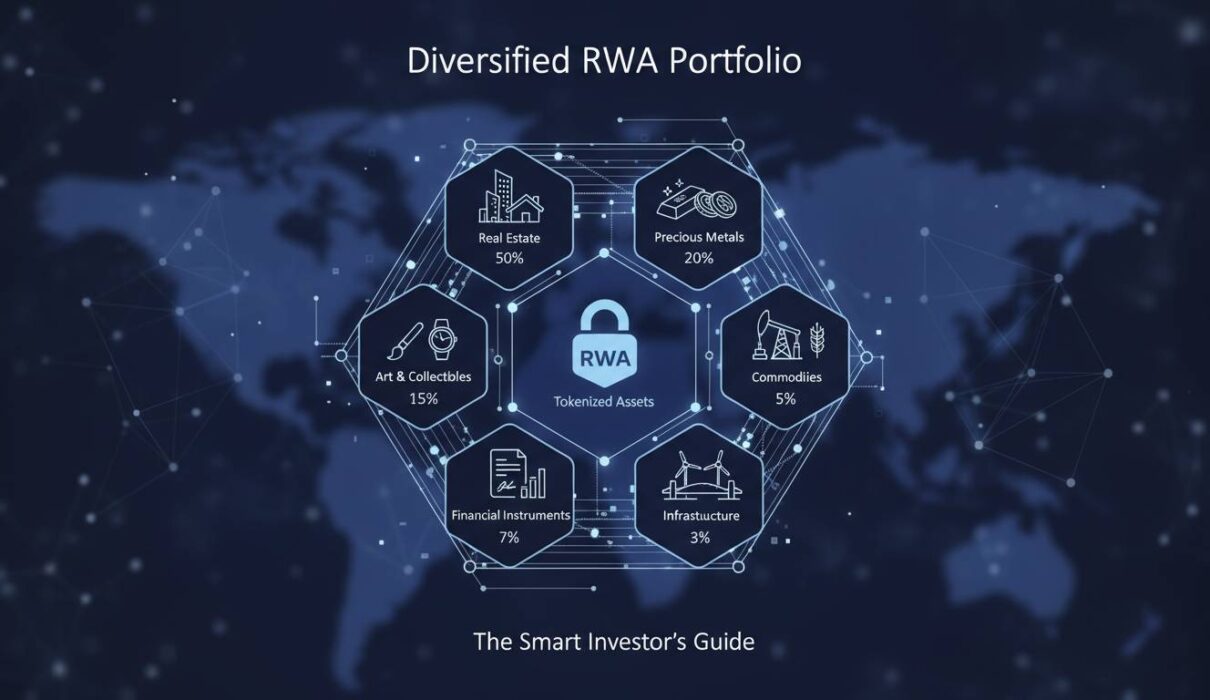
Core Categories of RWA Tokens:
| Asset Class | Examples | Market Maturity |
|---|---|---|
| Real Estate | Commercial buildings, residential properties, REITs | High |
| Commodities | Gold, silver, oil, agricultural products | High |
| Treasuries & Bonds | US Treasuries, corporate bonds, municipal bonds | Growing |
| Private Credit | Business loans, mortgage loans, invoice financing | Growing |
| Intellectual Property | Royalties, patents, entertainment rights | Emerging |
| Infrastructure | Energy projects, transportation, telecom towers | Emerging |
💡 STAT: The tokenization of illiquid assets could unlock $16 trillion in value globally by 2030 (McKinsey & Company, 2024)
Why Tokenization Matters
Tokenization addresses long-standing inefficiencies in traditional finance. Real estate, for instance, traditionally requires high minimum investments, lengthy settlement times, and limited liquidity. RWA tokenization solves these problems by enabling same-day settlement, reducing minimum investment thresholds to mere dollars, and creating secondary markets where previously illiquid assets can be traded.
For German investors specifically, the regulated environment under MiCA (Markets in Crypto-Assets Regulation) provides consumer protections while enabling innovation. German law now recognizes crypto-assets as financial instruments when meeting specific requirements, creating a clear path for RWA tokenization with legal certainty.
Benefits of Investing in RWA Crypto
The advantages of RWA crypto extend beyond simple technological novelty. These benefits address genuine pain points in traditional investing while opening new opportunities previously unavailable to retail investors.
Investment Advantages
1. Democratized Access
Fractional ownership through tokenization lowers barriers to entry dramatically. Where a commercial property might require €100,000+ minimum investment traditionally, RWA tokens can represent fractions worth just €10 or €25. This opens institutional-quality investments to retail portfolios.
2. Enhanced Liquidity
Traditional real estate investments often require 5-10 year commitment with limited exit options. Tokenized real estate can trade 24/7 on secondary markets, providing liquidity previously impossible for property investments.
3. Transparency and Verification
Blockchain’s immutable ledger ensures all transactions and ownership records are publicly verifiable. Smart contracts can automatically distribute income (rents, dividends, interest) to token holders, reducing administrative overhead and human error.
4. Programmable Income Distribution
Yield from RWA tokens can be automatically distributed via smart contracts. This is particularly valuable for income-focused investors seeking regular cash flow without managing paperwork or chasing payments.
5. Portfolio Diversification
RWA tokens provide exposure to asset classes with low correlation to volatile crypto markets. Tokenized treasury bills and real estate can stabilize portfolios heavily weighted in digital assets.
| Benefit | Traditional RWA | Tokenized RWA |
|---|---|---|
| Minimum Investment | €10,000 – €1,000,000+ | €10 – €100 |
| Settlement Time | 2-30 days | Minutes to hours |
| Secondary Market | Limited/Expensive | 24/7 Global |
| Transparency | Partial | Full on-chain |
| Transferability | Complex | Simple wallet-to-wallet |
📈 CASE: Singapore’s tokenized treasury bills from the Monetary Authority of Singapore (MAS) attracted $270 million in investment within the first month of launch , demonstrating institutional appetite for regulated RWA products.
Top RWA Crypto Platforms and Protocols
The RWA ecosystem has matured significantly, with several established platforms offering different specializations and risk profiles. German investors should prioritize platforms with clear regulatory compliance and audited asset backing.
Leading Platforms Comparison
| Platform | Asset Types | Regulation | Token Standard | Minimum Buy |
|---|---|---|---|---|
| Ondo Finance | US Treasuries, Real Estate | SEC Registered | ERC-20 | $1 |
| MakerDAO | Real World Collateral | Multi-jurisdictional | DAI | $1 |
| Centrifuge | Business Loans, Real Estate | German BaFin-approved | ERC-20 | $100 |
| Goldfinch | Senior Secured Loans | US-based | ERC-20 | $1 |
| Maple Finance | Institutional Lending | Multi-jurisdictional | ERC-20 | $1,000 |
| Fractional | Art, Collectibles | SEC Qualified | ERC-721 | $5 |
Ondo Finance
Ondo has emerged as the leading RWA protocol for institutional-grade treasury products. Their USDY (USD Yield) token provides exposure to short-term US Treasury bills with yields currently around 5%. The protocol is fully regulated and audited, making it suitable for conservative investors seeking stable returns.
✅ Pros: Regulated, low-risk assets, stable yields, transparent reserves
❌ Cons: Yields tied to interest rates (can decrease), limited upside potential
💰 Price: Tokens trade at ~$1.00 (representing share of underlying Treasuries)
🎯 For: Conservative investors seeking stable yields and portfolio diversification
Centrifuge
Centrifuge stands out as one of the few RWA platforms with explicit German regulatory approval. The platform tokenizes real estate and business loans, allowing investors to earn yield from real economic activity. Centrifuge’s Taurus protocol enables tokenization of real-world assets with legal enforceability under German law.
✅ Pros: BaFin approval, real asset backing, regulated framework
❌ Cons: Higher complexity, less liquid than pure stablecoin-like products
💰 Price: CFG token (governance) + pool tokens (yield-bearing)
🎯 For: German investors seeking regulatory compliance and real asset exposure
Maple Finance
Maple Finance focuses on institutional lending, connecting decentralized liquidity with real-world borrowers. The platform provides secured loans to established crypto institutions and traditional businesses, with yields typically ranging from 8-15% APY. However, the platform experienced challenges in 2023-2024 with defaults, highlighting the importance of due diligence.
✅ Pros: Higher yields, institutional borrowers, collateralized loans
❌ Cons: Counterparty risk, past default incidents, complexity
💰 Price: Variable by pool, typically $1.00-$1.05 per token
🎯 For: Sophisticated investors comfortable with credit risk analysis
How to Invest in RWA Crypto
Building a position in RWA tokens requires understanding the technical infrastructure, selecting appropriate platforms, and conducting proper due diligence. This section provides actionable steps for German investors entering the space.
Prerequisites
- [ ] Self-custody wallet (MetaMask, Rabby, or hardware wallet like Ledger)
- [ ] KYC-verified account on regulated exchange (Bitget, Kraken, or Binance)
- [ ] EUR payment methods for fiat on-ramp (SEPA transfer preferred)
- [ ] Basic understanding of Ethereum mainnet and gas fees
Time: 1-2 hours for setup | Cost: Network fees (€5-30 depending on congestion)
Step-by-Step Guide
1. Set Up Your Self-Custody Wallet
Download MetaMask or acquire a hardware wallet. Enable the Ethereum network (or relevant L2 like Arbitrum for lower fees). Secure your seed phrase offline—this is your ultimate ownership proof.
⏱ 15 minutes | 💡 Tip: Use a hardware wallet for holdings exceeding €1,000
2. Complete Exchange Verification
Register on a regulated exchange operating in Germany. Complete KYC verification with German address proof. German residents should prioritize exchanges with BaFin-compliant operations.
⚠️ Avoid: Unregulated offshore exchanges without German language support
→ Fix: Stick to Kraken, Bitget, or Binance Germany for regulatory clarity
3. Fund Your Account
Transfer EUR via SEPA to your exchange account. Avoid credit card deposits due to higher fees. Wait for settlement (typically 1-2 business days for first SEPA transfers).
4. Acquire Base Assets
Most RWA tokens trade against USDT, USDC, or ETH. Acquire sufficient stablecoins or ETH to execute your RWA strategy. Consider gas costs when determining position sizes.
5. Research and Select RWA Protocols
Before investing, verify:
– Asset backing and audit reports
– Regulatory compliance status
– Historical yield performance
– Collateral and insurance mechanisms
– Community and team transparency
⚠️ Avoid: Projects promising guaranteed returns exceeding 15% APY
→ Fix: Legitimate RWA yields range 4-12% with clear risk factors
6. Execute Your Investment
Connect your wallet to the RWA platform (or transfer to exchange if supported). Start with small positions to test withdrawal mechanics and understand your tax obligations.
7. Monitor and Manage
Track yields via protocol dashboards. Consider auto-compounding features. Reassess positions quarterly for regulatory or counterparty changes.
Troubleshooting
| Problem | Fix |
|---|---|
| Transaction failing | Increase gas limit or use L2 (Arbitrum, Optimism) |
| Platform not supported in Germany | Use VPN with non-German IP or select regulated alternatives |
| Withdrawals suspended | Check platform status, may require KYC re-verification |
| Unexpected losses | Review asset documentation, consider diversification |
| Tax reporting complexity | Use crypto tax software (CoinTracking, Koinly) |
Risks and Common Mistakes
While RWA crypto offers compelling benefits, the space carries significant risks that investors must understand and manage. German investors benefit from regulatory clarity but still face substantial due diligence requirements.
Critical Risks
1. Counterparty Risk
Unlike self-custody cryptocurrencies where you control assets, RWA tokens depend on platform solvency and honesty. Platform bankruptcy or fraud could result in total loss regardless of underlying asset quality.
2. Asset Valuation Challenges
Real-world assets require professional valuations that may become stale. Tokenized property values may not reflect market conditions, creating discrepancies between token price and liquidation value.
3. Regulatory Evolution
While MiCA provides current clarity, regulatory frameworks continue developing. Future restrictions could limit RWA token availability or impose unrealistic compliance burdens.
4. Smart Contract Risk
Code vulnerabilities can lead to exploits. Even audited contracts have suffered hacks. Never invest more than you can afford to lose in any single protocol.
5. Liquidity Risk
Despite improvements, many RWA tokens still face thin trading markets. Large positions may be difficult to exit without significant price impact.
⚠️ CRITICAL: The 2023-2024 period saw multiple RWA platforms experience failures including Celsius, Three Arrows Capital, and FTX-affiliated ventures. Prevent: Never invest more than 5-10% of portfolio in RWA crypto, diversify across multiple protocols, prefer regulated platforms with audited reserves.
Common Mistakes
| Mistake | Impact | Solution |
|---|---|---|
| Ignoring tax obligations | 25%+ tax + penalties in Germany | Use specialized crypto tax software |
| Over-concentration in single platform | Total loss if platform fails | Maximum 20% per protocol |
| Chasing highest yields | Principal loss from defaults | Prioritize transparency and audits |
| Skipping due diligence | Fraud or insolvency risk | Read whitepapers, verify audits |
| Using insecure wallets | Complete loss from hacks | Hardware wallet for >$1,000 |
| Ignoring exit liquidity | Unable to realize gains | Check trading volume before investing |
Expert Insights
Industry leaders emphasize both the transformative potential and current limitations of RWA tokenization.
👤 Dr. Jonas Gross, Chairman of the German Blockchain Association
“RWA tokenization represents the most significant bridge between traditional finance and crypto markets. The German regulatory framework under MiCA positions Europe, particularly Germany, as a global leader in compliant asset tokenization. However, investors must understand that regulatory compliance does not equal investment returns—the underlying asset quality remains paramount.”
📊 BENCHMARKS
| Metric | Average RWA Yield | Top 10% Protocols |
|---|---|---|
| Real Estate Tokens | 6-8% APY | 10-14% APY |
| Treasury-Backed | 4-5% APY | 5-6% APY |
| Private Credit | 8-12% APY | 12-18% APY |
| Commodity-Backed | 2-4% APY | 5-8% APY |
Conclusion
Real World Assets crypto represents a maturing intersection of traditional finance and blockchain technology, offering German investors regulated pathways to diversified income streams. The market’s growth to $15 billion+ in total value locked, combined with MiCA’s clear regulatory framework, creates an compelling environment for portfolio diversification.
Success in RWA investing requires balancing enthusiasm for innovation with rigorous due diligence. Prioritize regulated platforms with audited reserves, maintain appropriate diversification across protocols, and never invest more than you can afford to lose. The 6-12% yields available from quality RWA tokens compare favorably to traditional fixed-income alternatives while introducing new risk dimensions that sophisticated investors must understand.
As tokenization technology matures and institutional adoption accelerates, RWA crypto is positioned to become a permanent fixture in diversified portfolios. German investors, benefiting from Europe’s clearest regulatory framework, have an early-mover advantage in accessing this emerging asset class responsibly.
Frequently Asked Questions
What are Real World Assets in cryptocurrency?
Real World Assets (RWA) in crypto refer to traditional assets like real estate, commodities, bonds, or business loans that have been tokenized on blockchain networks. Each token represents fractional ownership of the underlying physical or financial asset, enabling 24/7 trading, lower minimum investments, and enhanced liquidity compared to traditional ownership.
Is RWA crypto legal in Germany?
Yes, RWA crypto is legal and regulated in Germany under the MiCA (Markets in Crypto-Assets) framework, which provides the European Union’s first comprehensive crypto regulation. German investors should use platforms with BaFin approval or clear regulatory compliance, as this ensures consumer protections while enabling legitimate tokenization activities.
What is the minimum investment for RWA tokens?
One of the key advantages of RWA tokenization is dramatically lower minimum investments compared to traditional assets. While real estate traditionally requires €100,000+ minimums, RWA tokens can be purchased for as little as €1-10 on most platforms. This democratization enables retail investors to access institutional-quality assets.
What returns can I expect from RWA crypto investments?
Yields vary significantly by asset class and risk profile. Treasury-backed tokens typically yield 4-6% APY, while real estate and private credit tokens offer 6-12% APY on average. Higher yields correlate with increased risk, including counterparty default and liquidity constraints. Always verify underlying asset quality before investing.
How do I avoid RWA crypto scams?
Research thoroughly before investing: verify audit reports, check regulatory status, review team backgrounds, and assess asset backing documentation. Avoid platforms promising guaranteed returns exceeding 12% APY, those with anonymous teams, or lacking transparent reserve proofs. Stick to established protocols with track records and regulatory approval.