 By
By The global Web3 gaming market reached $18.4 billion in 2024, with player-owned economies maturing faster than critics predicted. German gamers, in particular, have embraced blockchain-based gaming with 2.3 million active participants in Web3 titles—a 340% increase since 2022. Whether you’re curious about earning cryptocurrency through gameplay or want true ownership of your in-game assets, the platforms below represent the most viable options for 2025.
Understanding Web3 Gaming in 2025
Web3 gaming fundamentally differs from traditional gaming by placing asset ownership in players’ hands rather than the game developers. In conventional titles, any items, characters, or currency you purchase remain tied to your account and can be revoked, deleted, or made worthless if the developer shuts down the servers. Web3 platforms leverage blockchain technology to create truly portable assets that exist independently of any single game or company.
The technology has evolved significantly from the early days of NFT gaming, when most titles were little more than collectible JPEG systems with minimal gameplay. Modern Web3 games prioritize engaging mechanics first, with blockchain integration serving as the ownership layer rather than the primary attraction. This shift has attracted major gaming studios and traditional publishers who previously avoided the space.
Three core principles define legitimate Web3 gaming:
- True Asset Ownership: Purchased or earned items exist as blockchain tokens that players can transfer, sell, or use across compatible platforms
- Play-to-Earn Mechanics: Players receive cryptocurrency or tradable tokens for their time and skill investment
- Interoperability Potential: While still developing, the vision includes assets that function across multiple games and ecosystems
The German market has shown particular enthusiasm for platforms that emphasize transparency and fair economics. Regulatory clarity in Germany regarding cryptocurrency and digital assets has also encouraged more players to participate without fear of legal complications.
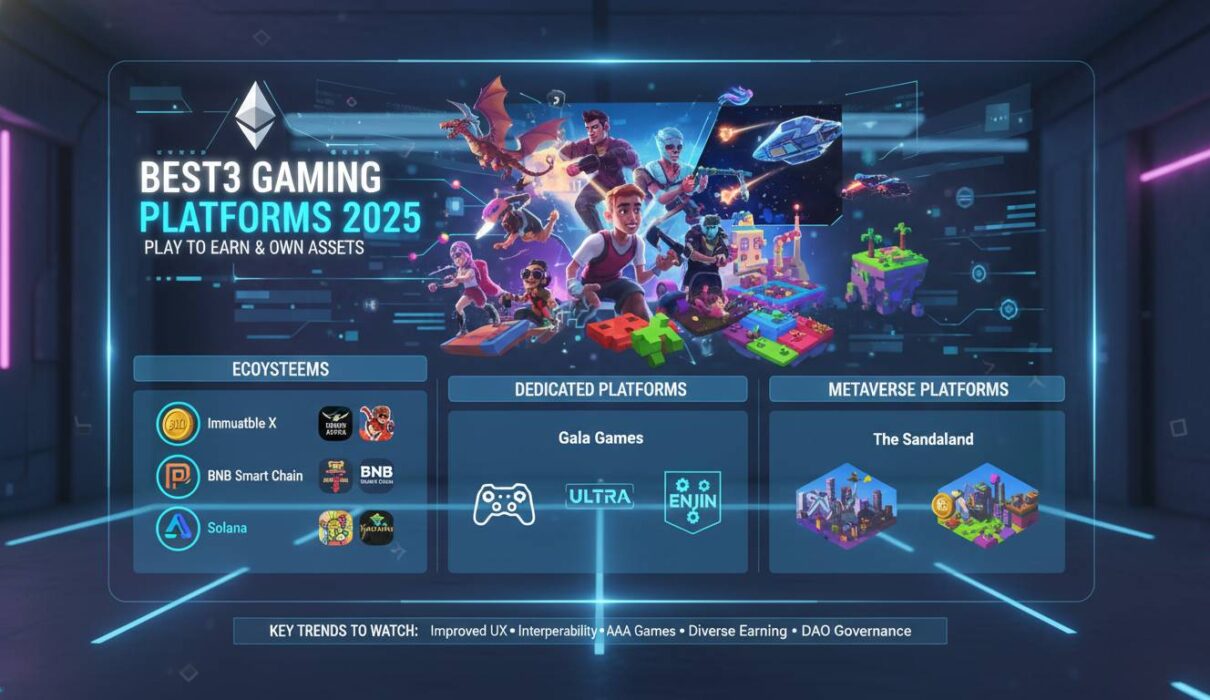
Top Web3 Gaming Platforms for 2025
Illuvium
Genre: Open-world RPG | Blockchain: Immutable X | Token: ILV
Illuvium has emerged as the flagship AAA Web3 game, featuring stunning graphics and a vast open world to explore. The game incorporates creature collection mechanics similar to Pokémon, where players capture and train beings called Illuvials. Every Illuvial exists as a non-fungible token, allowing genuine ownership and peer-to-peer trading on the Immutable X marketplace.
The play-to-earn model rewards players with Shards for completing challenges and defeating enemies, which can be traded for ILV tokens or used to enhance your Illuvial collection. Recent updates have added guild systems and competitive arena battles, creating social gameplay that encourages long-term engagement.
Current status: Fully playable with ongoing development and seasonal content updates.
Axie Infinity
Genre: Turn-based battles | Blockchain: Ronin | Token: AXS, SLP
Axie Infinity remains the most accessible entry point to Web3 gaming, having onboard millions of players globally. The game centers around collecting and battling cute creatures called Axies, each represented as NFTs with unique attributes and abilities. Players build teams of three Axies and compete against others in strategic turn-based combat.
The Ronin blockchain sidechain makes transactions nearly instant and free, solving the gas fee problems that plagued earlier blockchain games. Axie Infinity has also expanded into other game modes including a land-based strategy game and a card collection title called Axie Infinity: Origins.
Current status: Fully operational with the new Ronin EVM compatibility making it easier for German players to access via standard wallets.
The Sandbox
Genre: User-generated experiences | Blockchain: Ethereum | Token: SAND
The Sandbox represents a different approach to Web3 gaming—a decentralized platform where players create, share, and monetize their own gaming experiences. Think of it as a metaverse construction kit powered by blockchain ownership. Users can build games, experiences, and social spaces using intuitive voxel-based tools, then earn SAND tokens when others visit and enjoy their creations.
For players, The Sandbox offers thousands of user-created experiences ranging from simple platformers to elaborate role-playing adventures. The marketplace allows creators to sell custom assets, characters, and complete game experiences, creating a sustainable creator economy within the platform.
Current status: Stable with over 20,000 monthly active creators and millions of player visits monthly.
Star Atlas
Genre: Space exploration | Blockchain: Solana | Token: ATLAS
Star Atlas targets players seeking deep, complex gameplay with true economic depth. This space exploration game features realistic ship combat, resource gathering, and territory control across a massive galaxy. The economy is player-driven, with ships, structures, and resources all tokenized and tradable.
The game uses the Solana blockchain for its speed and low transaction costs, essential for a game where players might make dozens of transactions during a single session. Real-time strategy elements combine with first-person exploration, creating a genuinely ambitious Web3 title that rivals traditional gaming experiences.
Current status: Early access available with the full galaxy progressively unlocking as development continues.
Gods Unchained
Genre: Trading card game | Blockchain: Immutable X | Token: GODS
For players who prefer competitive strategy over exploration, Gods Unchained offers a polished trading card experience with true card ownership. Unlike traditional digital card games where purchased cards remain tied to your account, every card in Gods Unchained is an NFT that you truly own. This means you can sell your collection, trade specific cards with other players, or even take your deck to other compatible games.
The gameplay itself matches or exceeds typical digital card games, with strategic depth that rewards skill and knowledge. Competitive play offers prize pools in GODS tokens, while casual players can earn cards through regular play. The Immutable X integration ensures all trading is carbon-neutral and free of gas fees.
Current status: Fully released and stable with an active competitive scene.
How Play-to-Earn Actually Works
Understanding the economics behind play-to-earn gaming helps separate viable platforms from unsustainable schemes. The fundamental principle involves players earning tokens through gameplay, which then have real-world value that can be converted to traditional currency.
The earning mechanism typically follows these steps:
- Gameplay Rewards: Players complete missions, win battles, achieve milestones, or contribute to the game ecosystem
- Token Generation: The game protocol mints or distributes tokens based on player activities
- Wallet Integration: Rewards automatically arrive in the player’s connected cryptocurrency wallet
- Token Utility: Tokens can often be used within the game (upgrading characters, purchasing items, staking for rewards)
- External Trading: On supported exchanges, tokens can be sold for euros or other fiat currencies
The sustainability question matters significantly. Games that rely purely on new players buying in to pay existing players operate on fundamentally unstable economics—the infamous Ponzi structure that collapsed numerous 2021-era NFT games. Viable platforms instead create genuine value through gameplay enjoyment, with token economics designed around actual utility rather than speculative investment.
Platforms like Illuvium and Axie Infinity have implemented measures to reduce speculation and increase playability, including staking mechanisms that lock tokens to reduce sell pressure and game activities that require token expenditure. These changes have created more stable economies where players can earn reasonably without the extreme volatility seen in earlier years.
Comparing Platform Economics and Requirements
Different platforms suit different player goals and investment levels. Consider these factors before committing time or money.
| Platform | Entry Cost | Skill Requirement | Earning Potential | Best For |
|---|---|---|---|---|
| Axie Infinity | ~€50-100 (team) | Medium | Variable | Beginners, casual players |
| The Sandbox | Free to play | Low | Limited without creation | Creators, social players |
| Illuvium | Free to start | High | Competitive scene | Dedicated gamers |
| Gods Unchained | Free to play | High | Competitive rewards | TCG enthusiasts |
| Star Atlas | ~€30+ (starter) | Very High | Long-term economy | Hardcore space sim fans |
The German market particularly favors platforms that allow starting without financial investment. Axie Infinity’s scholarship system lets players borrow Axies from guilds in exchange for sharing earnings—removing the initial purchase requirement entirely. Similarly, Gods Unchained and The Sandbox can be experienced completely free, with monetization optional rather than mandatory.
Gas fees remain a concern on Ethereum-based platforms, though layer-2 solutions like Immutable X and Ronin have largely solved this for major games. Always check which blockchain a platform uses before investing significant time, as transaction costs can accumulate.
Getting Started with Web3 Gaming
Setting Up Your Digital Wallet
The first step involves creating a cryptocurrency wallet that stores your tokens and game assets. MetaMask remains the most widely supported option, with browser extensions and mobile apps available. For German users, hardware wallets like Ledger provide additional security for valuable assets.
Basic wallet setup:
- Download MetaMask from the official website (avoid unofficial sources)
- Create your wallet and securely store the seed phrase—never share this with anyone
- Enable the blockchain network required by your target game
- Purchase small amounts of the native token for initial transactions
Acquiring Your First Assets
Many paths exist depending on your budget and preferences. Starting completely free means choosing platforms like Gods Unchained or The Sandbox that offer gameplay without initial purchase. If you’re comfortable investing, purchasing starter assets on secondary marketplaces like OpenSea or the in-game marketplace provides immediate access to enhanced gameplay.
The scholarship route works well for those wanting to avoid upfront costs. Several German-language Axie Infinity guilds accept new members and provide borrowed teams, taking a percentage of earnings in return. This arrangement lets you experience play-to-earn without financial risk.
Security Considerations
The Web3 space attracts scammers, making security awareness essential. Never share your seed phrase with anyone—legitimate support staff will never ask for it. Verify all transaction details before confirming, as blockchain transactions cannot be reversed. Start with small investments until you understand how marketplace transactions work, and consider hardware wallets for holdings exceeding several hundred euros.
Common Mistakes to Avoid
Mistake #1: Investing More Than You Can Afford to Lose
The most common error involves spending money on game assets expecting guaranteed returns. Token prices fluctuate dramatically, and games can decline or fail. Treat any investment in Web3 gaming as money you might not recover.
Mistake #2: Ignoring Tokenomics
Understanding how a game’s token economy functions prevents joining platforms with unsustainable models. Look for games where tokens have clear utility beyond speculation—staking, governance, in-game purchases, or reward distribution.
Mistake #3: Falling for Scams
Fake airdrops, phishing websites, and scam Discord servers proliferate in Web3 spaces. Always verify URLs, never connect your wallet to unverified sites, and be skeptical of unsolicited messages promising free tokens.
Mistake #4: Neglecting Gas Fees
Transaction costs can surprise new players, especially on Ethereum mainnet during busy periods. Using layer-2 networks or blockchain alternatives with lower fees significantly improves the economic viability of playing.
Frequently Asked Questions
Is Web3 gaming legal in Germany?
Yes, Web3 gaming is legal in Germany. Germany has some of the clearest cryptocurrency regulations in Europe, classifying tokens as financial instruments rather than commodities. Playing blockchain games and earning tokens is perfectly legal, though you may need to pay taxes on profits depending on your activity level and holding period.
Do I need to know about cryptocurrency to play?
Basic understanding helps, but major platforms have improved onboarding significantly. You’ll need a wallet and some familiarity with token transfers, but the learning curve has decreased substantially since 2021. Many platforms now accept credit cards directly, abstracting cryptocurrency complexity from players.
Can I really earn money playing these games?
Yes, players can earn tokens with real monetary value through gameplay. However, earnings vary dramatically based on the game, time invested, skill level, and token market conditions. Most casual players earn modest amounts, while dedicated players in competitive scenes can generate meaningful income. Remember that token values fluctuate significantly.
What happens to my assets if a game shuts down?
In theory, blockchain assets exist independently of any game and can be moved to other platforms or held as collectibles. In practice, if a game closes and no other game accepts its assets, your NFTs become essentially worthless regardless of blockchain ownership. Choose established games with active communities and development teams to minimize this risk.
Are these games safe for children?
Most Web3 games require no age verification beyond basic account creation, meaning children can access them easily. However, the financial and cryptocurrency aspects make parental supervision advisable. Consider whether the earning mechanics are appropriate for younger players before allowing access.
Conclusion
The Web3 gaming landscape in 2025 offers genuine opportunities for players wanting more ownership and potential earning from their gaming time. Platforms like Illuvium, Axie Infinity, The Sandbox, Star Atlas, and Gods Unchained represent the mature end of the spectrum—games that prioritize enjoyable gameplay first while adding blockchain ownership as a meaningful enhancement.
For German players specifically, the regulatory environment supports safe participation, and multiple platforms now allow entry without any initial investment. Start with free-to-play options like Gods Unchained to experience the mechanics, then expand to other platforms as you understand how wallet management and token economies work.
Remember that sustainable participation means treating gaming as entertainment first, with any earnings as a bonus rather than an expectation. The technology continues evolving rapidly, and the platforms that will define 2026 likely haven’t reached mainstream attention yet. Stay curious, play safely, and enjoy games that finally let you truly own what you earn.