
 By
By Cryptocurrency has transformed from a niche technology into a mainstream asset class, with millions of Germans now holding digital currencies. Whether you’re intrigued by Bitcoin’s potential or curious about Ethereum’s applications, understanding how to safely purchase crypto is the essential first step. This guide walks you through everything you need to know to buy your first cryptocurrency in Germany in 2024, from selecting the right platform to securing your assets.
What Is Cryptocurrency and Why Should Beginners Consider It?
Cryptocurrency is a digital or virtual currency that uses cryptography for security and operates on decentralized networks, typically blockchain technology. Unlike traditional currencies issued by governments (fiat currencies), cryptocurrencies are not controlled by any central authority like a bank or government.
Bitcoin, created in 2009, remains the largest and most well-known cryptocurrency by market capitalization. As of 2024, there are thousands of different cryptocurrencies, often called “altcoins,” each with different use cases, technologies, and risk profiles.
For beginners in Germany, cryptocurrency investment offers several potential benefits. First, it provides portfolio diversification beyond traditional stocks, bonds, and savings accounts. Second, cryptocurrencies operate 24 hours a day, 7 days a week, offering flexibility that traditional markets don’t match. Third, blockchain technology itself represents an innovative field worth understanding, even with a small initial investment.
However, it’s crucial to acknowledge the risks. Cryptocurrency prices are highly volatile—values can swing significantly within hours or days. The market is also largely unregulated, meaning investors have fewer protections compared to traditional financial products. You should never invest more than you can afford to lose, and cryptocurrency should typically represent only a small portion of a diversified investment portfolio.
Choosing the Right Cryptocurrency Exchange in Germany
Selecting a reputable cryptocurrency exchange is the most important decision you’ll make as a beginner. In Germany, several platforms cater to German users, offering interfaces in German, German-language customer support, and payment methods popular in the country.
Major exchanges available in Germany include:
| Exchange | Founded | German Support | Payment Methods | Notable Features |
|---|---|---|---|---|
| Coinbase | 2012 | Yes | SEPA, credit card, PayPal | User-friendly, strong security |
| Binance | 2017 | Yes | SEPA, credit card, giropay | Largest volume, many altcoins |
| Kraken | 2011 | Yes | SEPA, credit card | Advanced features, good reputation |
| eToro | 2007 | Yes | SEPA, credit card, PayPal | Copy trading, social features |
| Bit2Me | 2014 | Yes | SEPA, credit card | Spanish origins, expanding in EU |
When evaluating exchanges, prioritize these factors:
Regulation and Licensing: German crypto exchanges must comply with BaFin (Bundesanstalt für Finanzdienstleistungsaufsicht) regulations. Ensure your chosen platform holds the necessary licenses or works with licensed partners. This provides important investor protections.
Security Features: Look for exchanges offering two-factor authentication (2FA), cold storage for customer funds, and insurance protection against breaches. Major exchanges have invested heavily in security following high-profile hacks in the industry’s history.
Fees: Cryptocurrency exchanges charge various fees including trading fees (typically 0.1% to 1% per trade), withdrawal fees, and sometimes deposit fees. German users should also consider whether the exchange passes on favorable SEPA transfer rates or charges premium fees for European payments.
User Experience: As a beginner, you’ll want an intuitive interface that makes buying your first crypto straightforward. Most major exchanges now offer simplified “buy” interfaces specifically designed for newcomers.
Setting Up Your Account and Verifying Your Identity
Once you’ve chosen an exchange, the account creation process typically takes 15-30 minutes to complete. German regulations require identity verification, so have your ID documents ready.
The registration process generally follows these steps:
Step 1: Create Your Account
Visit your chosen exchange’s website or download their app. Click “Register” or “Sign Up” and enter your email address and a strong password. You’ll receive a confirmation email—verify your address to proceed.
Step 2: Complete Identity Verification (KYC)
German anti-money laundering (AML) laws require exchanges to verify their customers’ identities. You’ll need to provide:
- A valid government-issued ID (German ID card, passport, or driver’s license)
- Proof of residence (utility bill or bank statement dated within the last 3 months)
- Your tax identification number (Steueridentifikationsnummer)
The verification process is usually automated, using video verification or document upload. Most users complete this within minutes, though it can occasionally take longer if manual review is required.
Step 3: Enable Security Features
Before funding your account, strengthen your security settings. Enable two-factor authentication (2FA) using an authenticator app rather than SMS, as SIM-swap attacks have compromised SMS-based 2FA. Set up withdrawal whitelisting if available—this limits where you can send your crypto, providing protection if your account is compromised.
Step 4: Fund Your Account
Most German users fund their accounts via SEPA bank transfer, which typically arrives within 1-2 business days with no deposit fees. Credit card deposits are faster but come with higher fees (typically 2-4%). Some exchanges also support giropay or PayPal for German users.
Understanding Cryptocurrency Wallets
Before making your first purchase, you should understand how cryptocurrency storage works. Unlike traditional bank accounts, cryptocurrency holdings aren’t stored in your exchange account—they’re stored in a wallet, with your exchange often acting as the custodian.
Exchange Wallets: When you buy crypto on an exchange, it typically holds your assets in its hot wallet (connected to the internet). This is convenient for trading but carries risk—if the exchange is hacked or goes bankrupt, you could lose your funds. Major exchanges like Coinbase have insurance policies and strong security, but this remains a consideration.
Software Wallets: These are apps installed on your phone or computer. They give you more control but require you to secure your private keys (essentially your password). Examples include MetaMask, Trust Wallet, and Exodus.
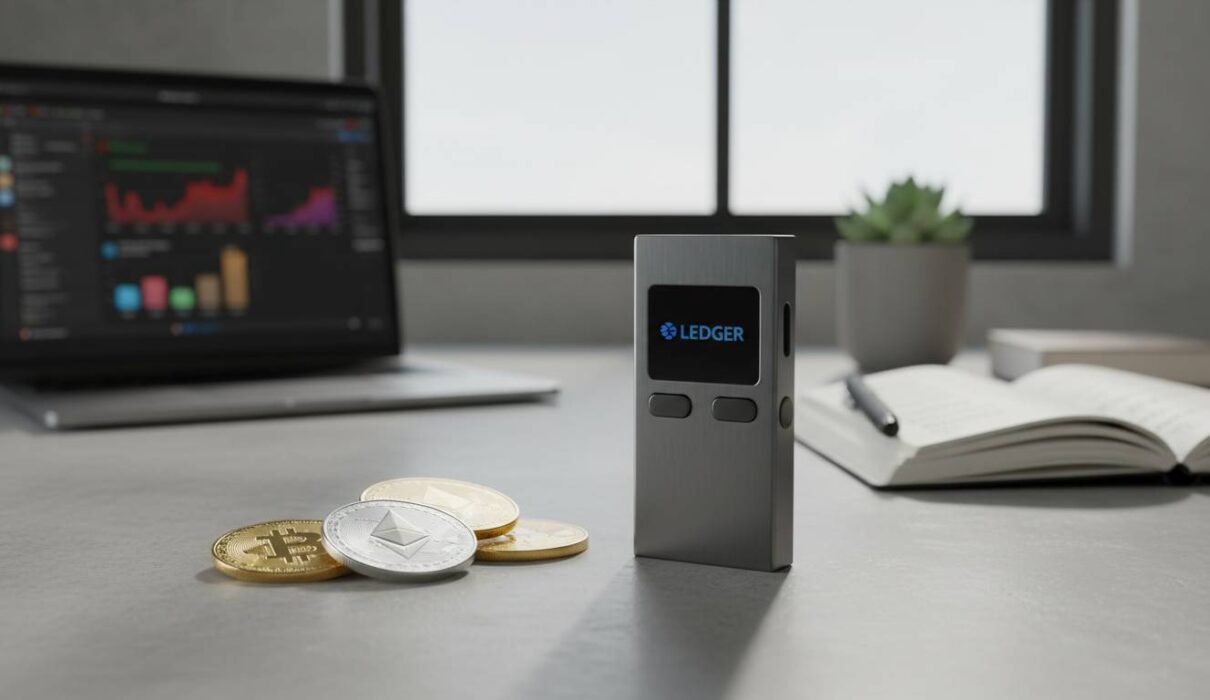
Hardware Wallets: These are physical devices that store your private keys offline, providing the highest security. Popular options include Ledger and Trezor devices, typically costing €50-€150. For any significant crypto holdings, a hardware wallet is strongly recommended.
Private Keys and Seed Phrases: When you set up a non-custodial wallet, you’ll receive a seed phrase (usually 12 or 24 words). This is critically important—anyone with your seed phrase can access your funds. Write it down on paper and store it securely. Never share it with anyone, and never store it digitally where it could be hacked.
Making Your First Cryptocurrency Purchase
With your account funded and security features enabled, you’re ready to buy your first cryptocurrency. Start with a small amount to familiarize yourself with the process.
Step 1: Choose Your Cryptocurrency
For beginners, Bitcoin (BTC) and Ethereum (ETH) are the most recommended starting points. They have the largest market capitalizations, highest liquidity, and the most extensive infrastructure. Bitcoin is often called “digital gold” and is seen as a store of value. Ethereum powers decentralized applications and smart contracts.
Other popular options include:
- Bitcoin Cash (BCH): Faster, cheaper transactions than Bitcoin
- Cardano (ADA): Proof-of-stake blockchain with academic approach
- Solana (SOL): High-speed blockchain with growing ecosystem
- Polygon (MATIC): Ethereum scaling solution
Research each cryptocurrency’s purpose, technology, and risks before buying. No two cryptocurrencies are identical, and their investment profiles vary significantly.
Step 2: Place Your Order
On most exchanges, you’ll use a simple buy interface:
- Select the cryptocurrency you want to buy
- Enter the amount (either in euros or in crypto units)
- Review the transaction, including fees
- Confirm your purchase
You’ll typically have the option of market orders (buy immediately at the current price) or limit orders (buy only if the price reaches your target). As a beginner, market orders are simpler and ensure your order executes.
Step 3: Consider Transferring to Personal Wallet
For security, consider transferring your purchased crypto to a personal wallet, especially if you plan to hold it long-term. This removes the counterparty risk of keeping funds on an exchange. However, note that transferring to a personal wallet incurs network fees (blockchain transaction fees), and you’ll need to pay gas fees on networks like Ethereum.
Security Best Practices for German Crypto Investors
The cryptocurrency space has seen significant hacking incidents and fraud. Protecting your investments requires ongoing vigilance.
Essential Security Practices:
Use strong, unique passwords for every exchange and wallet. Consider using a password manager to generate and store complex passwords. Never reuse passwords across different platforms.
Enable two-factor authentication on all accounts. Prefer authenticator apps (Google Authenticator, Authy) over SMS-based 2FA. Hardware security keys like YubiKey provide the highest level of protection for advanced users.
Be extremely cautious of phishing attempts. Scammers create fake websites, emails, and social media profiles impersonating exchanges or crypto companies. Always verify URLs carefully, and never click links in unexpected emails. Bookmark your exchange’s official website and use that bookmark exclusively.
Never share your private keys or seed phrases. Legitimate companies will never ask for this information. Anyone asking for your private keys is attempting to steal your funds.
Be wary of investment schemes promising guaranteed returns or “too good to be true” opportunities. If someone claims you can earn 10% daily or guarantees profits, it’s almost certainly a scam.
Recognizing Common Scams:
Common cryptocurrency scams in Germany include fake exchange websites, Ponzi schemes disguised as crypto investment clubs, romance scams where fraudsters build relationships before introducing “investment opportunities,” and fake mobile apps that steal login credentials.
The Federal Financial Supervisory Authority (BaFin) has warned consumers about numerous crypto-related investment frauds. Always verify that any platform you use is authorized by checking BaFin’s register.
Understanding Cryptocurrency Taxation in Germany
German tax rules for cryptocurrency can be complex, but some key principles apply:
Holding Period: If you hold cryptocurrency for more than one year, any gains from selling are generally tax-free in Germany. This applies to Bitcoin, Ethereum, and other cryptocurrencies classified as private assets.
Short-Term Trading: If you sell cryptocurrency within one year of acquisition, any profits are subject to capital gains tax (Kapitalertragsteuer). This includes a 25% flat tax plus solidarity surcharge, and potentially church tax if applicable.
Staking and Lending Rewards: Income from staking, lending, or yield farming is treated as income from capital assets (Einkünfte aus Kapitalvermögen) and is taxable in the year received.
Mining Income: If you mine cryptocurrency, the received coins constitute income at their market value at the time of receipt.
Record Keeping: Maintain detailed records of all your cryptocurrency transactions including dates, amounts, costs basis, and wallet addresses. This documentation is essential for accurate tax reporting.
For complex situations, consider consulting a German tax advisor (Steuerberater) with expertise in cryptocurrency taxation. The rules continue to evolve as authorities develop clearer guidance on digital assets.
Common Mistakes Beginners Should Avoid
New cryptocurrency investors frequently make several predictable errors. Learning to recognize these pitfalls will help you navigate the market more successfully.
Mistake 1: Investing More Than You Can Afford to Lose
The crypto market’s volatility means prices can drop 50% or more in weeks. Only invest money you’re genuinely comfortable potentially losing entirely. Never invest funds needed for rent, bills, or emergency expenses.
Mistake 2: Chasing Prices Instead of Research
It’s natural to want to buy when prices are rising, but buying at local tops often leads to losses. Instead, research projects thoroughly and consider dollar-cost averaging (investing fixed amounts regularly regardless of price) to smooth out volatility.
Mistake 3: Ignoring Fees
Transaction fees, trading fees, and withdrawal costs add up significantly, especially with frequent trading. A trade costing 0.5% in fees might seem small, but executing 20 trades monthly amounts to 10% annually in costs alone.
Mistake 4: Not Backing Up Seed Phrases
Losing access to your wallet because you didn’t properly back up your seed phrase has caused millions in losses. Write your seed phrase on paper and store it in a secure location—preferably a safe deposit box or home safe.
Mistake 5: Falling for Scams
The crypto space attracts fraudsters precisely because transactions are irreversible and users are often inexperienced. Always verify any platform, Double-check URLs, and be skeptical of unsolicited investment opportunities.
Frequently Asked Questions
Is it legal to buy cryptocurrency in Germany?
Yes, buying and holding cryptocurrency is completely legal in Germany. The country has embraced cryptocurrency more positively than many other nations, with clear regulations from BaFin. German citizens can legally purchase, hold, and sell cryptocurrencies on licensed exchanges.
How much money do I need to start buying crypto?
You can start with very small amounts—some exchanges allow purchases of €10 or less. However, transaction fees become proportionally significant with very small amounts. A reasonable starting amount for most beginners is €50-€100, which allows you to learn the process without significant financial risk.
Which cryptocurrency should I buy first as a beginner?
Bitcoin (BTC) and Ethereum (ETH) are the most recommended starting points for beginners. They have the longest track records, highest liquidity, and most extensive resources available for learning. Both are available on every major exchange and can be considered relatively “safer” than smaller cryptocurrencies with less history.
How do I know if a cryptocurrency exchange is safe in Germany?
Verify that the exchange is licensed by BaFin or works with a licensed partner. Check online reviews and community feedback, and ensure the exchange offers strong security features including 2FA, cold storage options, and insurance protections. Major established exchanges like Coinbase, Kraken, and Binance generally have stronger security track records than newer or smaller platforms.
Do I have to pay taxes on cryptocurrency gains in Germany?
It depends on your holding period. If you hold cryptocurrency for more than one year before selling, gains are generally tax-free. If you sell within one year, profits are subject to capital gains tax at your personal income tax rate. Staking rewards and similar income are taxable in the year received.
Can I lose all my money buying cryptocurrency?
Yes, cryptocurrency investments can become worthless. Prices are extremely volatile, projects can fail, and scams are prevalent. You should only invest money you can afford to lose entirely. Many experienced investors recommend limiting crypto to 5-10% of your total investment portfolio.
Conclusion
Entering the cryptocurrency market in 2024 as a German beginner requires careful preparation but is entirely manageable with the right approach. Start by choosing a reputable, BaFin-regulated exchange, complete proper identity verification, and enable robust security measures before funding your account. Consider beginning with a small investment in Bitcoin or Ethereum to understand how the process works before exploring other cryptocurrencies.
Remember that cryptocurrency remains a high-risk investment category. The technology and market continue evolving rapidly, and past performance doesn’t guarantee future results. Stay informed, never invest more than you can afford to lose, and treat your cryptocurrency holdings with appropriate security measures.
The most successful cryptocurrency investors are those who take time to learn, start cautiously, and continuously educate themselves as the market develops. Your first purchase doesn’t need to be your last—use this experience to build knowledge and confidence before expanding your involvement in this innovative space.