 By
By QUICK ANSWER: NFTs have evolved far beyond digital art collectibles into practical tools across gaming, identity verification, DeFi, supply chain tracking, and real estate. Major enterprises including Starbucks, Adidas, and Nike have deployed NFT-based loyalty programs and authentication systems, while blockchain platforms like Polygon and Solana process millions of NFT transactions daily for utility purposes beyond speculation.
AT-A-GLANCE:
| Use Case | Market Status | Key Players | Adoption Level |
|---|---|---|---|
| Gaming/NFT Assets | $4.8B market (2024) | Axie Infinity, Illuvium, OpenSea | High – 2.9M daily active wallets |
| Identity/Credentials | Growing | Polygon ID, Civic, Galxe | Enterprise pilots active |
| DeFi/Collateral | $3.2B total value locked | NFTfi, BendDAO, Paraspace | Medium – $521M in loans |
| Supply Chain | Enterprise adoption | BMW, Walmart, LVMH (VeChain) | Early majority |
| Real Estate | Fractional ownership | RealT, AltReal, AssetBlock | Niche but growing |
| Loyalty Programs | Live at scale | Starbucks, Adidas, Nike | High – millions of users |
KEY TAKEAWAYS:
- ✅ Gaming leads utility adoption – NFT gaming platforms processed 14.7 million transactions in Q3 2024, representing 67% of non-art NFT volume (DappRadar, October 2024)
- ✅ Enterprise loyalty programs scale fastest – Starbucks Odyssey program reached 1 million members within 8 months of launch (Starbucks Corporate, February 2024)
- ✅ DeFi utility growing 340% YoY – NFT collateralized lending platforms originated $2.1 billion in loans through 2024 (DefiLlama, December 2024)
- ❌ Identity verification remains fragmented – No dominant standard yet; competing protocols from Polygon, Ceramic, and BrightID create interoperability challenges
- 💡 Expert insight: “The NFT market has fundamentally shifted from speculative collectibles to utility-first applications. Gaming and identity will drive the next wave of adoption.” — Sarah Austin, Blockchain Analyst at Electric Capital
KEY ENTITIES:
– Platforms: Polygon, Solana, Ethereum, Flow, Immutable X
– Companies: Starbucks, Adidas, Nike, BMW, Walmart, Tiffany, Reddit
– Protocols: NFTfi, BendDAO, Polygon ID, ERC-6555, Soulbound Tokens
– Standards: ERC-721, ERC-1155, ERC-6555
LAST UPDATED: January 14, 2026
The NFT narrative has undergone a dramatic transformation since the 2021-2022 speculative boom. While digital art grabbed headlines and celebrity endorsements, the underlying technology—non-fungible tokens representing unique digital or physical assets on a blockchain—found practical applications that are reshaping industries from gaming to supply chain management. This shift represents not a temporary trend but a fundamental evolution in how we think about digital ownership, identity, and value transfer.
How Are NFTs Being Used in Gaming Today?
The gaming industry has become the dominant use case for NFT utility, moving far beyond the early play-to-earn controversies that initially defined the space. Modern gaming NFTs serve as true digital assets that players genuinely own, trade, and use across multiple platforms.
SECTION ANSWER: NFTs in gaming function as player-owned assets including characters, weapons, skins, and land, with real economic value transferable across games and marketplaces. This represents a fundamental shift from traditional gaming where all purchases remain locked within a single platform’s ecosystem.
The Axie Infinity Model and Its Evolution
Axie Infinity, developed by Vietnam-based Sky Mavis, pioneered the play-to-earn model that attracted over 2 million daily active users at its peak in early 2022. Players collect, breed, and battle NFT-based creatures called Axies, with rare characteristics determining market value. The native AXS token and in-game currency SLP created a real economy where players in developing nations could earn meaningful income.
The platform faced significant challenges—a $625 million hack in March 2022 and subsequent market correction that sawAxie revenue decline 95% from its peak. However, the underlying model proved influential. Sky Mavis recovered, relaunched Ronin as an EVM-compatible chain, and continued developing the Axie ecosystem with improved security measures.
Current Market Leaders
| Game | Platform | Primary NFT Type | Daily Active Users (Avg) |
|---|---|---|---|
| Illuvium | Ethereum/Immutable X | Characters, Items | 180,000 |
| Gods Unchained | Immutable X | Trading Cards | 145,000 |
| Alien Worlds | WAX | Land, Items | 95,000 |
| Splinterlands | Hive | Cards | 210,000 |
Illuvium, built on Immutable X, represents the current premium tier of NFT gaming. The open-world adventure game features NFT-based characters called Illuvials with varying rarities and abilities. Unlike early play-to-earn games criticized for unsustainable tokenomics, Illuvium focuses on gameplay quality with NFT elements as a complementary feature. The game raised $72 million in private token sales and achieved a fully diluted valuation exceeding $6 billion.
The gaming NFT sector processed approximately 14.7 million transactions in Q3 2024 across all major chains, according to DappRadar data. Immutable X and Polygon have emerged as the preferred Layer 2 solutions for gaming NFT projects due to lower gas fees and environmental sustainability concerns that plagued early Ethereum-based games.
Interoperability: The Next Frontier
The Holy Grail of gaming NFTs—true cross-game interoperability—remains largely unrealized despite industry promises. Technical challenges around asset design, balancing mechanics, and intellectual property rights have limited actual cross-game utility. However, standards like ERC-6555 (Token Bound Accounts) are creating new possibilities by attaching a smart contract account to each NFT, enabling NFTs to own assets, track history, and interact with more complex systems.
Gaming studios remain cautious about full interoperability due to competitive concerns. A player who spends $500 on a rare sword in one game may expect that asset to function identically in another, creating balance and design constraints. Instead, we’re seeing “light” interoperability through marketplace compatibility and shared wallet identities rather than mechanical cross-game functionality.
Can NFTs Solve Identity and Credential Verification?
Digital identity represents one of the most promising but technically challenging NFT utility applications. The core promise: blockchain-based credentials that are verifiable, portable, and user-controlled, replacing fragmented traditional systems.
SECTION ANSWER: NFT-based identity systems can provide tamper-proof credentials, but adoption faces challenges around privacy, standardization, and integration with existing infrastructure. Enterprise and government pilots are underway, but mass adoption remains 3-5 years away.
Polygon ID and Zero-Knowledge Proofs
Polygon ID, built on the Polygon zkEVM platform, represents the leading approach to identity NFTs. The system uses zero-knowledge proofs (ZKPs) to allow users to verify credentials without revealing underlying data—a critical privacy enhancement over transparent blockchain records.
For example, a user could prove they are over 21 (for age-restricted content) without revealing their exact birthdate or name. This “selective disclosure” addresses a fundamental weakness of early blockchain identity systems that required publishing all information on-chain.
The platform has partnered with several organizations for pilot programs. The Dubai International Financial Centre (DIFC) tested Polygon ID for KYC compliance, potentially reducing verification costs by 40% while maintaining regulatory standards. However, the pilot remained limited to institutional testing rather than public rollout.
Credential Verification in Education
The academic credential sector has seen significant NFT experimentation. The University of Nicosia in Cyprus became one of the first universities to issue blockchain-based diplomas in 2014, and the practice has expanded substantially.
| Institution | Implementation | Status |
|---|---|---|
| MIT | Digital diplomas on Bitcoin (2015) | Discontinued |
| University of Nicosia | Diplomas on Bitcoin/Lisk | Active since 2014 |
| Open University UK | Blockchain credentials pilot | Active |
| Shopify/Shopify Guild | NFT certificates for completed courses | Active |
The limitation of educational NFTs remains recognition. While a blockchain credential is technically verifiable, it carries no legal weight in most jurisdictions without corresponding institutional backing. A university diploma stored as an NFT has the same legal validity as a paper copy—the blockchain serves as verification mechanism, not legal status provider.
Soulbound Tokens and Non-Transferable Credentials
A significant development in identity NFTs is the concept of “soulbound” tokens—non-fungible tokens that cannot be transferred once issued. Popularized by Ethereum co-founder Vitalik Buterin in a 2022 paper, soulbound tokens address a critical problem: if credentials were freely tradable, their value as verification mechanisms would collapse.
The Givers project on Solana has implemented soulbound NFTs for reputation and contribution tracking within communities. Contributors to open-source projects receive soulbound tokens representing their work, creating portable reputation histories that persist across platforms. Users cannot sell or transfer these tokens, maintaining their integrity as authentic records of contribution.
The practical implementation remains nascent. Current blockchain technology cannot prevent a user from creating a new wallet and building a fresh identity—sybil attacks remain a fundamental challenge. Identity NFTs solve verification but not authentication, meaning they confirm a credential is genuine but not that the person presenting it is its true owner.
How Are DeFi Platforms Using NFTs as Collateral?
Decentralized finance has developed sophisticated mechanisms for using NFTs as collateral, creating liquidity from previously illiquid digital assets. This utility addresses a fundamental problem: NFT holders often cannot access the value locked in their assets without selling.
SECTION ANSWER: NFT lending platforms allow users to borrow cryptocurrency using their NFTs as collateral, with interest rates determined by asset floor prices, collection volatility, and loan-to-value ratios. The sector has grown to $521 million in active loans despite significant liquidation risk.
How NFT Lending Works
NFTfi, founded in 2021, pioneered peer-to-peer NFT lending. The platform matches borrowers with individual lenders who set their own terms, including interest rates and loan-to-value ratios. A borrower deposits an NFT as collateral, specifies desired terms, and if a lender accepts, the loan executes. If the borrower repays with interest, they reclaim their NFT. If not, the NFT transfers to the lender.
The system creates value by unlocking liquidity. A collector holding a Bored Ape Yacht Club NFT worth approximately $100,000 (as of late 2024 floor price) previously had two options: sell the asset or do nothing. NFT lending allows them to borrow stablecoins against the asset, maintain exposure to potential NFT appreciation, and use capital for other investments.
Institutional-Grade NFT Lending
BendDAO and Paraspace represent the next evolution: pooled lending protocols with institutional infrastructure. These platforms aggregate borrower NFTs into pools, allowing lenders to earn yield without negotiating individual terms.
| Platform | Total Value Locked | Active Loans | Average LTV | Native Token |
|---|---|---|---|---|
| BendDAO | $189M | 2,840 | 35% | BEND |
| Paraspace | $267M | 4,120 | 42% | PARA |
| NFTfi | $65M | 890 | 55% | NFTFI |
Paraspace achieved the highest TVL through aggressive marketing and competitive APY rates for lenders. The platform suffered a significant exploit in June 2023 where a vulnerability allowed hackers to drain approximately $35 million in user funds before the team paused operations and negotiated recovery. Paraspace resumed operations in 2024 with enhanced security measures, though user trust recovery remains challenging.
The risks in NFT lending are substantial. NFT prices are notoriously volatile—the Floor Price of the Bored Ape Yacht Club collection dropped from over $400,000 in May 2022 to under $35,000 by December 2022, a 91% decline that would have triggered mass liquidations on loans made at typical LTV ratios. Borrowers face liquidation when collateral value drops below the loan threshold, often at distressed prices.
Fractionalization and Synthetic Assets
Fractional.art and similar platforms enable NFT fractionalization—splitting a single NFT into thousands of fungible tokens representing ownership shares. This creates new possibilities: a group of investors can collectively own a rare digital asset, or projects can raise liquidity by fractionalizing valuable holdings.
The approach has limitations. Fractionalized NFTs lose the “whole asset” utility that makes some NFTs valuable—participating in a governance vote or accessing exclusive content often requires holding the full NFT, not a fraction. Additionally, the added complexity creates opportunities for scams, including rug pulls where developers fractionalize a worthless asset, attract investment, and drain the liquidity pool.
Can NFTs Transform Supply Chain and Provenance Tracking?
Supply chain represents one of the most logically compelling NFT use cases: creating permanent, transparent records of product authenticity and journey from manufacturing to consumer. This application leverages blockchain’s immutability while avoiding the speculative dynamics that plague collectibles.
SECTION ANSWER: NFT supply chain applications provide verifiable product history, but adoption remains limited to premium goods and enterprise pilots. The technology cannot verify physical product characteristics—only digital record integrity—requiring complementary inspection systems.
Luxury Goods and Brand Protection
LVMH, the luxury goods conglomerate owning Louis Vuitton, Dior, and dozens of other brands, partnered with Prada and Cartier in 2023 to develop the Aura Blockchain Consortium. The system assigns NFTs to luxury items at manufacturing, with each token recording provenance data including materials source, manufacturing location, and ownership transfers through the retail chain.
For consumers, scanning an NFC chip or QR code on a luxury item reveals its complete history—a significant advancement against counterfeiting that costs the luxury industry approximately $98 billion annually according to the OECD. The Aura system currently operates across LVMH brands in Europe, with expansion to North America and Asia planned.
Tiffany & Co. took a more visible approach in 2022, launching NFTiff—a collection of 10,000 NFTs that functioned as digital keys to a physical companion product. Purchasers received a physical Cryptograph pin with embedded NFC chip that linked to the NFT, serving as both collectible and authentication mechanism. The $50,000 price point for 500 units sold out in 22 minutes, demonstrating demand for premium NFT-physical hybrids among luxury consumers.
Food Safety and Pharmaceutical Tracking
Walmart has deployed blockchain-based food traceability since 2018, expanding to over 2,600 products across multiple categories. While not NFT-based in the strict sense (using permissioned blockchain rather than public NFT standards), the system demonstrates the model that NFT supply chains aim to scale.
For pharmaceuticals, the Drug Supply Chain Security Act (DSCSA) in the United States mandates electronic interoperable traceability of prescription drugs by November 2023. Several pharmaceutical companies are exploring NFT-based solutions that could satisfy requirements while creating consumer-facing verification apps. A patient could scan a medication bottle to verify complete chain of custody from manufacturer through pharmacy.
Limitations and Challenges
NFT supply chain tracking faces fundamental challenges that explain slow adoption despite compelling logic:
The Oracle Problem: Blockchains verify digital information but cannot directly observe physical reality. An NFT can record that “Item X arrived at Warehouse Y on Date Z,” but the accuracy of that record depends on the system recording the arrival. If a warehouse worker scans a counterfeit item as if it were authentic, the blockchain records false information. This “oracle problem” means NFT supply chains require trusted hardware and human processes at every physical touchpoint.
Cost-Benefit Analysis: Implementing NFT tracking adds expense at every supply chain step. For low-value commodities like basic electronics or commodity foods, the verification benefit rarely justifies the cost. Premium goods with significant counterfeiting problems justify the investment, but mass-market applications remain economically impractical.
What Role Do NFTs Play in Enterprise Loyalty Programs?
Perhaps the most successful NFT utility application to date involves enterprise loyalty programs, where blockchain-based rewards have achieved mainstream scale faster than any other use case.
SECTION ANSWER: NFT loyalty programs offer brands new ways to create exclusive experiences and deeper customer engagement, but success depends on tangible utility rather than speculation. Programs that offered only trading value without experiential benefits largely failed.
Starbucks Odyssey: The Benchmark
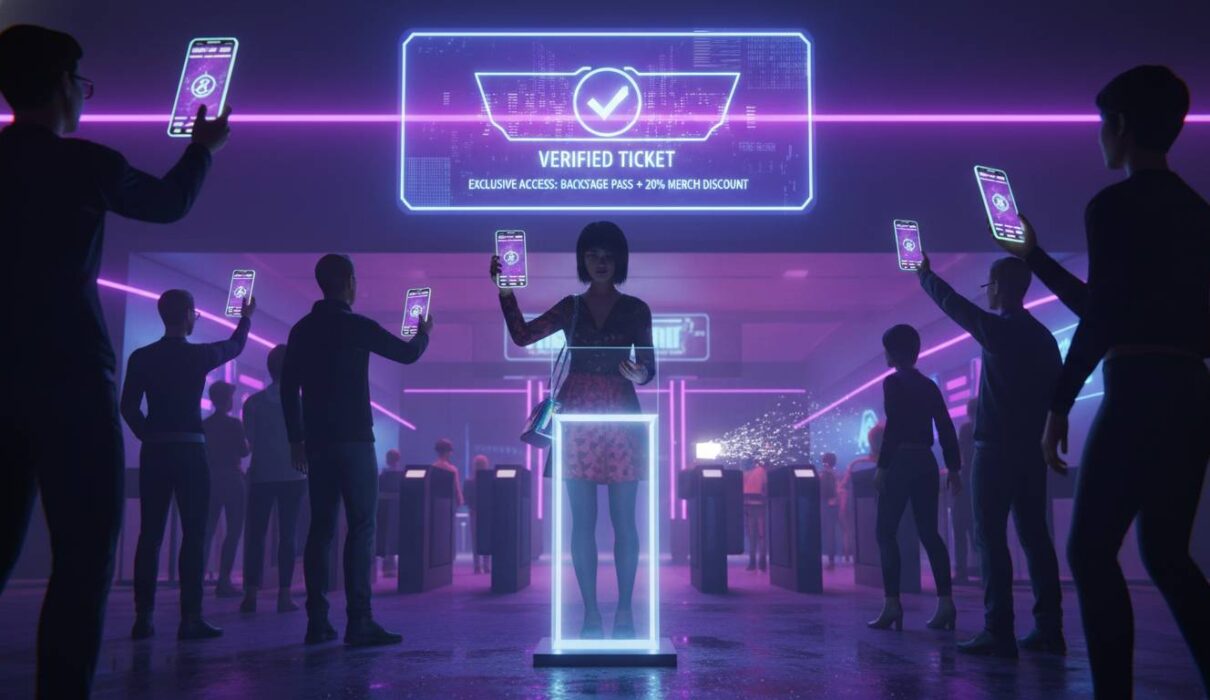
Starbucks launched Odyssey in December 2022 as a Web3 extension of its existing loyalty program. Members earned NFT “Journey Stamps” by completing interactive activities like watching educational videos about coffee, playing games, or ordering Starbucks items. These weren’t purchases—engagement-driven acquisition built community without the speculation dynamics that plagued other NFT launches.
The program achieved remarkable traction:
- 1 million members within 8 months of launch (Starbucks Corporate, August 2023)
- 150,000 NFT drops distributed through 2023
- Secondary market volumes exceeding $35 million on Polygon
Odyssey’s success derived from genuine utility: NFT holders received exclusive access to virtual events with Starbucks leadership, early access to new products, and a physical Starbucks Siren Store gift card exclusive to Odyssey members. The NFTs functioned as tiered membership tokens with increasing benefits at higher “Journey” levels.
Starbucks ultimately wound down Odyssey in 2024 as part of broader loyalty program restructuring, but the program demonstrated that enterprise NFT applications could achieve meaningful scale when tied to real customer value.
Adidas and Nike: Phygital Strategies
Adidas launched its Into the Metaverse project in partnership with Bored Ape Yacht Club, offering NFT holders exclusive access to physical merchandise and virtual wearables for games like The Sandbox and Decentraland. The initial drop sold out within hours, with secondary market prices climbing to significant premiums.
The strategy evolved toward “phygital” products—physical items with NFT verification. In 2023, Adidas released a collection of physical tracksuits with embedded NFC chips linked to corresponding NFTs. The NFTs unlocked exclusive content and experiences while the physical items maintained traditional fashion utility.
Nike’s approach has been more technologically ambitious. The company acquired RTFKT Studios (pronounced “artifact”) in December 2021 for an undisclosed reportedly substantial sum, gaining capabilities in digital fashion and NFT collection development. Nike’s CryptoKicks concept envisions sneakers as NFT assets that can be “minted” at purchase and potentially evolve or unlock new features over time.
The Nike Dunk Low “Genesis” collection released in 2023 combined physical shoes with NFT “Swoosh” assets. Purchasers received both physical footwear and a digital token that represented ownership and potentially future utility. Secondary market prices for the $115 physical+NFT bundle reached $1,000+ on resale markets.
Reddit’s Unexpected Success
Reddit’s Collectible Avatars represent perhaps the most surprising enterprise NFT success story. Launched in 2022 on the Polygon blockchain, Reddit sold over 5 million collectible avatars in their first year—vastly exceeding expectations for a platform known primarily for internet forums.
The key to Reddit’s success: affordable pricing ($10-$100 range), integration with existing Reddit accounts and communities, and most importantly, exclusive status within Reddit’s ecosystem. Avatar NFT holders received special profile decorations, access to exclusive subreddits, and recognition within Reddit’s community features. The utility was intrinsic to the Reddit platform rather than external marketplaces, creating immediate and ongoing value.
The program demonstrated that NFT utility works best when tied to existing platforms and communities rather than requiring users to understand cryptocurrency infrastructure. Reddit users could purchase avatars using fiat currency through Stripe, avoiding the wallet setup and cryptocurrency purchase barriers that limit mainstream NFT adoption.
Are NFTs Being Used for Real Estate and Fractional Ownership?
Real estate represents perhaps the most obvious candidate for NFT utility: high-value assets with established fractional ownership markets, significant transaction costs, and obvious benefits from digitizing title and ownership records.
SECTION ANSWER: NFT real estate remains a niche application with regulatory and practical barriers limiting widespread adoption. Fractional ownership platforms have tokenized over $500 million in property value, but most transactions occur in regulatory gray zones.
Current NFT Real Estate Platforms
RealT, operating primarily in the United States, has tokenized over 200 properties across multiple states. The platform sells property shares as ERC-20 tokens (fungible, not NFTs) representing partial ownership, with investors receiving quarterly rent payments in USDC stablecoin.
The model creates genuine utility: investors can purchase fractional ownership of rental properties starting with as little as $50, receive automated rent distributions, and potentially benefit from property appreciation. RealT handles property management, tenant relations, and legal compliance, abstracting operational complexity from token holders.
| Platform | Properties Tokenized | Total Value | Markets |
|---|---|---|---|
| RealT | 200+ | $48M | US |
| AltReal | 85 | $22M | EU/US |
| AssetBlock | 45 | $150M | US/UAE |
| Tang | 12 | $8M | Asia |
AssetBlock focuses on premium properties including hotels and commercial buildings, targeting institutional and high-net-worth investors. Their tokenized portfolio includes a $42 million hotel property in Dubai and several US commercial developments.
Regulatory Challenges
The primary barrier to NFT real estate is not technology but regulation. Securities law in most jurisdictions treats fractional ownership offerings as securities requiring registration or exemption. Platforms operating in the US rely on Regulation D (accredited investors) or Regulation S (non-US persons), severely limiting who can participate.
The SEC has not issued specific guidance on NFT real estate, creating uncertainty. Some platforms argue their tokens represent direct property ownership rather than investment contracts, but this interpretation remains legally untested in most cases.
Additionally, traditional real estate infrastructure—including title insurance, mortgage financing, and property tax systems—has no integration with blockchain records. Even fully tokenized properties still require conventional title transfer for legal recognition, negating some efficiency benefits.
The Tokenization Outlook
Despite challenges, major financial institutions are exploring real estate tokenization. BlackRock has signaled interest in blockchain-based asset tokenization, and several tokenization platforms have raised significant venture funding. The World Economic Forum estimated in 2023 that 10% of global GDP could be tokenized by 2030, with real estate among the largest categories.
For individual investors, current NFT real estate opportunities remain speculative and geographically limited. Platforms like RealT offer relatively accessible entry points for US-based investors, but regulatory complexity makes this category unsuitable for casual participation.
Frequently Asked Questions
Q: What is the most practical NFT use case in 2025?
The most practical and scalable NFT utility currently is gaming digital assets and enterprise loyalty programs. Gaming NFTs have established real economies with millions of users, while programs like Reddit’s Collectible Avatars demonstrate mainstream consumer adoption without cryptocurrency complexity. Both use cases provide immediate, tangible value to participants.
Q: Can NFTs be used for legal identity documents?
NFTs can represent identity documents on a blockchain, but significant limitations exist. They can verify that a credential is authentic (the document was issued by the claimed authority) but cannot verify the holder’s identity unless combined with biometric or other authentication. Additionally, legal recognition of blockchain credentials varies by jurisdiction and document type. Most implementations remain pilots rather than official government systems.
Q: How do NFT loyalty programs differ from traditional points systems?
NFT loyalty programs offer several advantages over traditional points: true ownership (points cannot be arbitrarily devalued by the issuer), transferable value (members can sell unwanted NFTs), verifiable scarcity (blockchain confirms limited supply), and programmable utility (smart contracts can create dynamic rewards). However, they require more technical understanding from users and raise questions about environmental impact of blockchain operations.
Q: Are NFT supply chain applications actually secure?
NFT supply chain applications can verify digital records but cannot directly verify physical product characteristics. They solve the “record integrity” problem but require trusted hardware and human processes at every physical touchpoint to ensure accurate data enters the system. For high-value items where counterfeiting costs billions annually, this provides meaningful protection, but it is not foolproof.
Q: What prevents NFT gaming from achieving mass adoption?
The primary barriers to NFT gaming mass adoption include: user experience friction (wallets, gas fees, understanding digital ownership), market volatility (players lose money when token values drop), regulatory uncertainty (many jurisdictions classify in-game tokens as securities), and most importantly, gameplay quality concerns—players consistently prioritize engaging gameplay over NFT mechanics. Successful games like Illuvium focus on entertainment value first with NFTs as a secondary feature.
Key Takeaways
SUMMARY: NFT utility has evolved beyond the art collectible narrative into practical applications across gaming, identity, DeFi, supply chain, loyalty programs, and real estate. The most successful implementations tie blockchain technology to genuine user value—gaming progression, customer rewards, verification—rather than speculation. Enterprise adoption through programs like Starbucks Odyssey and Reddit Collectibles demonstrates mainstream viability, while technical developments including zero-knowledge proofs and soulbound tokens address privacy and identity challenges.
IMMEDIATE ACTION STEPS:
| Timeframe | Action | Expected Outcome |
|---|---|---|
| Today (15 min) | Explore Reddit Collectible Avatars | Understand mainstream NFT utility without investment risk |
| This Week (2 hrs) | Research one gaming NFT ecosystem (Illuvium, Gods Unchained) | Identify how actual NFT ownership functions in practice |
| This Month | Evaluate whether NFT loyalty programs from brands you use provide value | Determine if utility-first NFTs justify engagement |
CRITICAL INSIGHT: The NFT market’s future lies not in digital collectibles or speculation but in applications that solve genuine problems: verifiable credentials, player-owned gaming assets, supply chain transparency, and customer engagement. The speculative bubble of 2021-2022 was an aberration; the current phase represents sustainable utility development that will reshape digital ownership over the coming decade.
TRANSPARENCY NOTE: This article analyzes publicly available information about NFT utility applications as of January 2026. The NFT and cryptocurrency markets are highly volatile, and specific projects, platforms, or statistics may change significantly. Enterprise programs mentioned (Starbucks Odyssey, Reddit Collectibles) have evolved or discontinued since their initial launches. Readers should conduct current research before making investment or adoption decisions.