 By
By Decentralized exchanges have transformed how Americans trade cryptocurrency by eliminating intermediaries and giving users direct control over their assets. Unlike centralized platforms, DEXs operate through automated smart contracts, allowing traders to swap tokens directly from their wallets without creating an account or submitting personal identification. For US users specifically, the landscape presents unique considerations: regulatory uncertainty from the SEC and CFTC shapes which platforms are accessible, while varying state-by-state regulations add another layer of complexity. Despite these challenges, several reputable decentralized exchanges continue serving American users with robust trading features, competitive fees, and strong security track records. This guide examines the top options available, compares their essential features, and helps you determine which DEX best matches your trading needs and risk tolerance.
Understanding Decentralized Exchanges for US Users
Decentralized exchanges represent a fundamental shift in cryptocurrency trading philosophy. Rather than holding user funds in centralized wallets controlled by a company, DEXs facilitate peer-to-peer transactions through blockchain-based smart contracts. When you trade on a DEX, your assets remain in your personal wallet until the moment of exchange, then transfer directly to the trading counterpart’s wallet. This architectural choice carries significant implications for US users.
The regulatory environment surrounding DEXs in the United States remains evolving and occasionally uncertain. The Securities and Exchange Commission has increasingly scrutinized decentralized finance platforms, with several exchanges restricting access to US IP addresses or geo-blocking American users altogether. The Commodity Futures Trading Commission also maintains oversight over certain derivative products traded on decentralized platforms. These regulatory pressures mean that not all global DEXs welcome American traders, and those that do often implement geographic restrictions that can affect user experience.
State-level regulations add further complexity. Some states like New York require specific BitLicense compliance, while others maintain their own securities registrations. Reputable DEXs typically implement comprehensive geo-blocking to comply with these requirements, though the technical implementation varies. Before using any DEX, US users should verify that their chosen platform legally operates in their specific state and complies with federal regulations.
The benefits of using decentralized exchanges extend beyond regulatory navigation. Reduced counterparty risk stands as a primary advantage—you never need to trust a centralized entity with your funds. Lower fees for certain transaction types, resistance to censorship, and accessibility without identity verification represent additional benefits that attract privacy-conscious American traders. However, users must accept full responsibility for wallet security, as lost private keys result in permanent asset loss with no recovery mechanism.
Key Factors to Consider When Choosing a DEX
Selecting the right decentralized exchange requires evaluating several interconnected factors that collectively determine your trading experience and security posture. Understanding these criteria helps you make informed decisions aligned with your specific needs.
Liquidity and Trading Volume直接影响 your ability to execute trades at favorable prices. High liquidity platforms like Uniswap experience minimal price slippage even for larger orders, while emerging DEXs may struggle with spread gaps that eat into your trading profits. For US users, checking whether a DEX maintains sufficient liquidity for your typical trade sizes becomes essential before committing funds.
Gas Fees and Network Costs vary dramatically across different blockchain networks and can significantly impact profitability, especially for frequent traders. Ethereum mainnet transactions often cost $5-50 or more during peak congestion, while layer-2 solutions like Arbitrum or Optimism offer dramatically lower fees—sometimes under $0.50 per swap. Some DEXs operate exclusively on specific networks, so understanding your preferred chain matters considerably.
Supported Assets and Trading Pairs differ substantially between platforms. While major DEXs list hundreds of tokens, specific altcoins or emerging projects may only trade on certain platforms. US users should verify their desired tokens are available before selecting an exchange, as cross-chain bridging adds complexity and risk to the trading process.
User Interface and Experience ranges from basic but functional to sophisticated trading terminals with advanced charting. Beginners benefit from simple swap interfaces with clear pricing displays, while experienced traders may want limit orders, stop-loss functionality, and detailed order book visualizations. Mobile accessibility varies as well, with some DEXs offering dedicated apps while others function only through web interfaces.
Security History and Audits deserve serious consideration given the irreversible nature of blockchain transactions. Examining whether a protocol has experienced exploits, reviewing their smart contract audit reports, and understanding their insurance or treasury mechanisms for handling potential losses provides crucial risk assessment. The decentralized finance space has seen billions in exploits, making diligence essential.
KYC Requirements and Privacy present a nuanced trade-off for US users. Some DEXs operate fully anonymously with no identity verification, while others have implemented voluntary or mandatory KYC programs in response to regulatory pressure. Your personal privacy preferences and regulatory comfort level should guide this decision.
Top Decentralized Exchanges for US Users
After examining the current market landscape, regulatory compliance status, and feature sets relevant to American traders, several platforms stand out as the most suitable options for US users seeking reliable decentralized trading experiences.
Uniswap
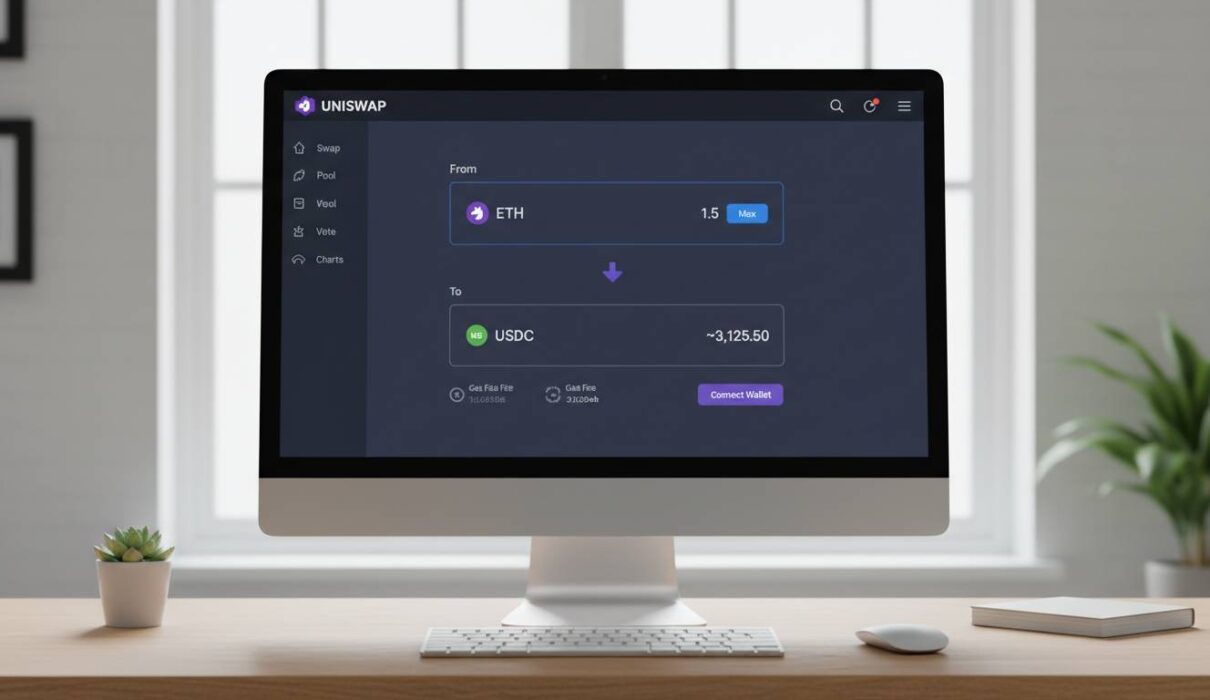
Uniswap maintains its position as the dominant decentralized exchange by trading volume, operating exclusively on Ethereum and expanding to supported layer-2 networks including Arbitrum and Optimism. The platform introduced the constant product automated market maker model that became industry standard, enabling anyone to provide liquidity and earn fees.
For US users, Uniswap offers a significant advantage: no mandatory KYC verification. The protocol operates without account creation requirements, allowing traders to connect compatible wallets like MetaMask or Coinbase Wallet and begin trading immediately. However, users should note that Uniswap Labs, the development company behind the protocol, has implemented certain IP restrictions, and the interface may occasionally display warnings for US-based users depending on detected location.
The fee structure involves a 0.3% trading fee on standard swaps, split between liquidity providers and the protocol. This competitive rate makes Uniswap attractive for frequent traders, though Ethereum network gas fees can substantially increase all-in costs during high-demand periods. Recently introduced v3 pools offer concentrated liquidity for professional market makers but require more sophisticated understanding to utilize effectively.
Security-wise, Uniswap undergoes regular audits and maintains an active bug bounty program. The protocol has experienced no major security breaches affecting user funds, though users must remain vigilant about phishing attempts impersonating the official interface.
Curve Finance
Curve Finance specializes in stablecoin trading and assets with low volatility, making it particularly attractive for US users seeking minimal slippage when exchanging between different stablecoins or stablecoin-peg assets. The platform operates primarily on Ethereum mainnet but has expanded to Arbitrum, Avalanche, and other chains.
The unique AMM design optimized for similar-priced assets results in extremely low slippage—often fractions of a percent even for large trades. This makes Curve particularly valuable for:
- Converting between different stablecoins (USDC to USDT, DAI to USDC)
- Trading wrapped assets or liquidity provider tokens
- Engaging in yield strategies with reduced impermanent loss risk
Trading fees are lower than Uniswap at 0.04% for stable pairs, though liquidity provider fees vary by pool. For US users, Curve maintains accessibility without mandatory KYC, implementing the same wallet-connect approach as competitor platforms.
The recent CRV token launch introduced governance and fee discount mechanisms, allowing committed users to reduce their trading costs further. However, Curve’s specialized focus on correlated assets means it unsuitable for general altcoin trading, requiring users to maintain accounts on multiple platforms for complete portfolios.
dYdX
dYdX stands as the prominent decentralized derivatives platform offering margin trading and perpetual contracts—products typically associated with centralized exchanges but now available in decentralized format. Operating on Ethereum layer-2 infrastructure using the Cosmos SDK, dYdX provides a trading experience comparable to professional centralized platforms.
For sophisticated US users seeking leverage or derivatives exposure, dYdX offers:
- Up to 20x leverage on perpetual contracts
- Cross-margining across positions
- Full order book trading with limit orders, stop-loss, and take-profit
- Institutional-grade matching engine performance
The platform has implemented Geo-blocking for certain jurisdictions including US states where derivatives trading faces restrictions. Washington, Nevada, and Hawaii residents face complete restrictions, while other US users may access the spot trading features but face limitations on derivatives. Before using dYdX, American users should verify their state’s specific status.
Trading fees are competitive with centralized competitors, and the dYdX token provides fee discounts for active traders. The transition to fully decentralized governance has been ongoing, with the protocol increasingly operated by the community rather than the founding team.
Security measures include insurance fund coverage for liquidations, regular audits, and proof of solvency mechanisms. However, the complexity of margin trading introduces substantial risk, and users should fully understand liquidation mechanics before utilizing leverage.
SushiSwap
SushiSwap emerged as a Uniswap fork that evolved into a full-featured DeFi platform, offering trading, yield farming, and staking. The platform operates across multiple chains including Ethereum, Arbitrum, Avalanche, and Polygon, providing broad accessibility for US users.
TheXv2 upgrade introduced concentrated liquidity similar to Uniswap v3, allowing liquidity providers to optimize their fee earnings. SushiToken incentives initially drove massive liquidity mining programs, though these have been reduced as the platform matured.
For US users, SushiSwap maintains accessibility without mandatory KYC, though the protocol has implemented certain compliance measures in response to regulatory pressure. The multi-chain presence means users can select networks matching their preferences for speed versus security.
Notable features include:
- Onsen liquidity mining program
- Kashi lending platform
- BentoBox yield optimization
- Cross-chain bridge integration
The platform has experienced security incidents in its history, including a 2021 exploit resulting in significant losses, though comprehensive security upgrades have been implemented since. Users should factor this history into their risk assessment when committing significant capital.
Comparing DEX Features for US Traders
Making informed decisions requires direct comparison of the features most relevant to US users. The following analysis examines critical dimensions:
| Feature | Uniswap | Curve | dYdX | SushiSwap |
|---|---|---|---|---|
| KYC Required | No | No | Partial (state-dependent) | No |
| US Access | Generally available | Generally available | Restricted in some states | Generally available |
| Trading Fees | 0.30% | 0.04% (stable pairs) | 0.02%-0.05% | 0.30% |
| Primary Focus | GeneralDEX | Stablepairs | Derivatives | Multi-chain DeFi |
| Ethereum Gas | High | High | Medium | High |
| Derivatives | No | No | Yes | No |
| Supported Chains | Ethereum + L2s | Multi-chain | Cosmos/Ethereum | Multi-chain |
Gas costs represent the most variable expense, often exceeding the trading fee itself on Ethereum mainnet. US users exploring lower-cost alternatives should consider layer-2 networks like Arbitrum or Optimism, which offer the same underlying protocols with dramatically reduced transaction costs. Polygon and Avalanche provide additional options with competitive fee structures.
Regulatory considerations continue evolving. The SEC has signaled increasing attention to DeFi platforms, and US users should monitor developments that could affect platform accessibility. Maintaining multiple exchange accounts provides flexibility if restrictions intensify.
Security Best Practices for DEX Usage
Using decentralized exchanges safely requires understanding the unique risk model and implementing appropriate protections. Unlike centralized platforms offering insurance or recovery mechanisms, DEX users bear full responsibility for security.
Wallet Security forms the foundation of safe DEX usage. Hardware wallets like Ledger or Trezor provide the strongest protection against remote attacks, storing private keys in secure hardware independent from internet-connected computers. Software wallets remain vulnerable to malware and phishing attacks, though they offer convenience for smaller portfolios. US users should assess their portfolio value against the convenience tradeoff.
Transaction Verification prevents significant losses from malicious contracts. Before approving any swap:
- Verify the contract address matches the official platform
- Check token approvals carefully, limiting access to necessary amounts
- Preview all transaction details including slippage tolerance
- Confirm the receiving address before signing
Phishing Protection requires constant vigilance. Attackers frequently create fake sites, send malicious emails, and manufacture wallet Approval exploits. Always verify URLs carefully, use bookmarked sites rather than clicked links, and never share your seed phrase regardless of apparent urgency.
Slippage and Front-Running represent additional risks in automated market maker systems. Setting appropriate slippage tolerance prevents failed transactions during volatile periods while avoiding excessive settings that invite MEV extraction. Uniswap and similar platforms display expected output before confirmation—reviewing these figures catches most errors.
Portfolio Diversification across multiple wallets or protocols reduces single-point-of-failure risk. Keeping large positions in hardware wallets and only connecting smaller trading budgets to DEXs limits potential exposure from any single compromise.
Frequently Asked Questions
Are decentralized exchanges legal in the United States?
Decentralized exchanges operate in a legally gray area in the United States. While using DEXs themselves is generally legal for personal trading, certain activities may trigger regulatory scrutiny. The SEC considers some tokens securities, and trading these on any platform could implicate federal securities laws. The CFTC maintains authority over cryptocurrency derivatives traded on decentralized platforms. US users should understand their specific state’s regulations and consult legal counsel if engaging in substantial trading activity.
Can US users use Uniswap without verification?
Yes, US users can access Uniswap without completing KYC verification. The protocol operates without mandatory identity requirements, allowing wallet connections and trading without account creation. However, users should be aware that the interface may display compliance warnings for US IP addresses, and regulatory developments could affect future accessibility.
What’s the difference between a DEX and a centralized exchange?
Centralized exchanges hold user funds in company-controlled wallets and maintain order books matching buy and sell orders internally. Decentralized exchanges use smart contracts to facilitate peer-to-peer trading directly from user wallets. Centralized platforms offer better liquidity and fiat onramps but require trust and comprehensive KYC. Decentralized options provide privacy and reduced counterparty risk but require users to manage their own security and navigate more complex interfaces.
Which DEX has the lowest fees for US users?
For stablecoin trades, Curve Finance offers the lowest fees at approximately 0.04%. For general token swaps, dYdX provides competitive rates starting at 0.02% for makers. However, network gas fees dramatically impact total costs—layer-2 networks like Arbitrum and Optimism offer much lower all-in costs than Ethereum mainnet transactions, regardless of the specific DEX used.
Do I need a wallet to use decentralized exchanges?
Yes, a cryptocurrency wallet is required to interact with any DEX. Popular options include MetaMask (browser extension and mobile), Coinbase Wallet, Rainbow, or hardware wallets like Ledger and Trezor. Your wallet connects to the DEX interface through browser extensions or mobile apps, enabling transaction signing without exposing private keys to the exchange itself.
What happens if a DEX is hacked or I lose access to my wallet?
Unlike centralized exchanges, decentralized platforms generally have no customer support to recover lost funds. If a DEX experiences an exploit, funds may be irretrievably lost unless the protocol maintains insurance mechanisms. Similarly, losing your wallet seed phrase means permanent loss of all associated funds with no recovery option. This underscores the critical importance of securing wallets appropriately and only risking capital you can afford to lose.
Conclusion
The US decentralized exchange landscape offers capable options for traders prioritizing privacy, self-custody, and access to broad token markets. Uniswap remains the default choice for most users given its top-tier liquidity, broad asset availability, and continued accessibility for American traders. Curve excels for stablecoin and low-volatility strategies, while dYdX serves those seeking derivatives exposure through decentralized channels. SushiSwap offers multi-chain flexibility for users operating across networks.
Before committing funds, thoroughly understand each platform’s fee structure including network gas costs, verify your accessibility based on state residence, and implement robust wallet security appropriate to your portfolio size. The regulatory environment continues evolving, so maintaining flexibility through multiple platform accounts positions you to adapt to future changes.
Your specific trading needs should drive platform selection: general token swaps point toward Uniswap, stablecoin optimization toward Curve, derivatives interest toward dYdX, and multi-chain strategies toward SushiSwap. Start with small test transactions to confirm functionality before committing significant capital, and always prioritize security over convenience in the volatile cryptocurrency landscape.