 By
By The NFT market has evolved dramatically, with transaction fees being a decisive factor for collectors and creators alike. While some platforms charge upwards of 5% per sale, others offer near-zero commissions, making the difference between profit and loss on every trade. Understanding which marketplaces provide the lowest fees—without sacrificing liquidity or security—can transform your NFT strategy from cost-intensive to economically efficient.
Key Insights
– Fee structures range from 0% to 5% across major platforms
– Blockchain choice significantly impacts gas fees (Ethereum vs. Solana vs. Layer 2)
– Zero-fee marketplaces often compensate through tokenomics or marketplace fees
– Hidden costs like gas fees can exceed platform commissions
– Germany ranks among the top European markets for NFT trading volume
This guide examines the best NFT marketplaces with low fees, analyzes their cost structures, and provides actionable strategies to minimize transaction costs on every trade.
Understanding NFT Marketplace Fee Structures
NFT marketplace fees consist of multiple components that collectively determine your true trading costs. Most platforms advertise a single commission percentage, but experienced traders know that gas fees, withdrawal minimums, and minting costs can add significantly to the base rate.
Platform Commission vs. Gas Fees
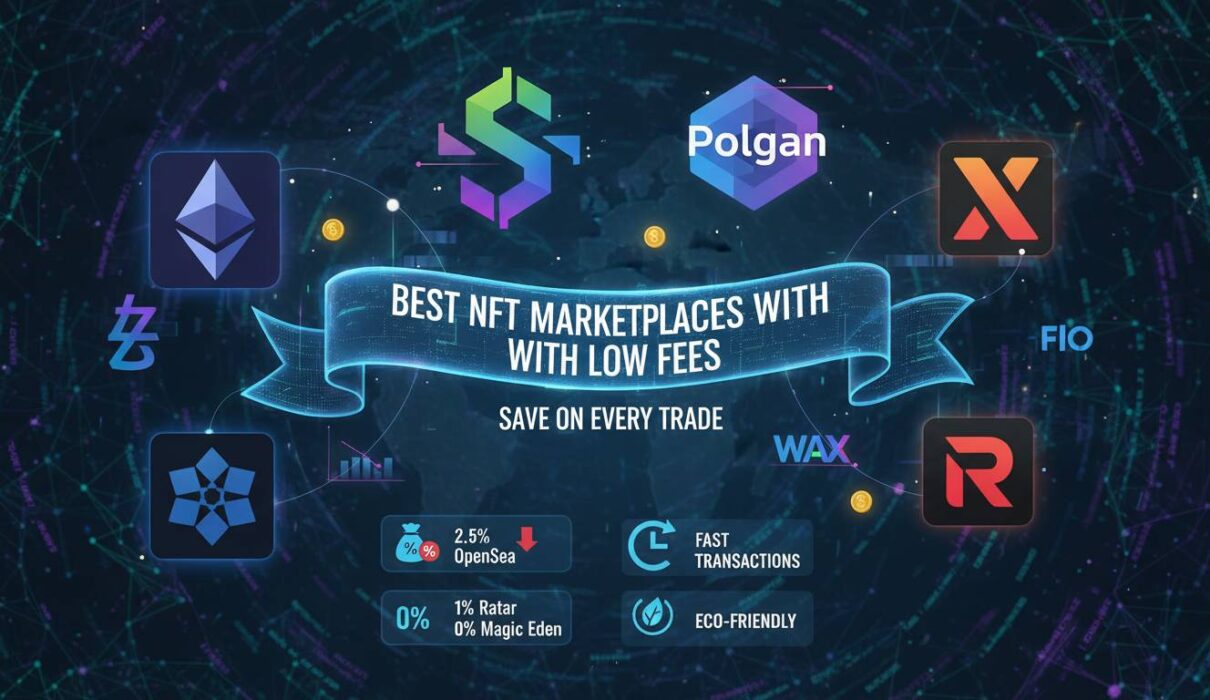
The platform commission is the percentage the marketplace retains from each sale. This typically ranges from 0% to 5%, depending on the platform’s business model and target market. OpenSea charges 2.5%, Foundation takes 5%, while newer entrants like Blur have adopted 0% trading fees to capture market share.
Gas fees are separate blockchain transaction costs that users pay directly to the network. These fluctuate based on network congestion and can sometimes exceed the platform fee itself—particularly on Ethereum during peak trading periods. Layer 2 solutions like Immutable X and Polygon have dramatically reduced these costs, with some platforms eliminating gas fees entirely for users.
| Fee Component | Impact | Typical Range |
|---|---|---|
| Platform Commission | Percentage of sale price | 0% – 5% |
| Gas/Miner Fees | Blockchain transaction cost | $0.01 – $100+ |
| Minting Fees | One-time NFT creation cost | $0 – $50+ |
| Withdrawal Fees | Moving assets off-platform | $0 – $15 |
Why Low-Fee Marketplaces Matter for German Traders
Germany has emerged as one of Europe’s most active NFT markets, with particular strength in digital art and gaming assets. The country’s strong crypto regulatory framework provides legal clarity that attracts serious traders. However, German users face additional considerations: SEPA bank transfers to crypto exchanges can take 1-3 business days, making gas-efficient platforms particularly valuable for active traders who need to move assets quickly without waiting for traditional banking hours.
Top NFT Marketplaces with Low Fees
Blur — The Zero-Fee Pioneer
Blur has disrupted the NFT marketplace landscape by eliminating trading fees entirely. The platform, which launched in October 2022, offers 0% marketplace fees for both buyers and sellers—a radical departure from industry standards that forced competitors to reconsider their pricing.
Fee Structure:
– Marketplace fee: 0%
– Gas fees: Variable (Ethereum network)
– Royalty support: Optional, creator-defined
The platform generates revenue through its BLUR token and aggregate services rather than direct trading commissions. Blur’s aggressive airdrops and loyalty rewards have attracted significant trading volume, with the platform regularly ranking among the top three marketplaces by volume despite its youth.
Best For: Active traders, arbitrageurs, and those who prioritize fee savings over marketplace selection.
Magic Eden — Solana’s Dominant Platform
Magic Eden processes the majority of Solana-based NFT trades, offering a 2% platform fee that positions it competitively against Ethereum-based alternatives charging 2.5% or more.
Fee Structure:
– Marketplace fee: 2%
– Gas fees: Minimal (Solana network averages under $0.01)
– Royalty support: 0-10% creator-defined
Solana’s extremely low transaction costs make Magic Eden particularly attractive for traders executing frequent transactions. The platform’s integration with major Solana wallets and robust mobile experience has made it the default choice for the vibrant Solana NFT community.
Best For: Solana NFT collectors, gamers, and those seeking low-cost experimentation.
Immutable X — The Layer 2 Leader
Immutable X is designed specifically for gaming NFTs and offers what it calls “zero gas fees” for minting and trading. Built as an Ethereum Layer 2 solution, it maintains the security of Ethereum while eliminating the gas fee burden that plagues the mainnet.
Fee Structure:
– Marketplace fee: 2%
– Gas fees: $0 for all transactions
– Minting: Free
– Royalty support: Up to 10%
This combination of a reasonable 2% platform fee and zero gas costs makes Immutable X particularly attractive for game developers and players who need to trade frequently without worrying about transaction costs eating into their gains.
Best For: Gaming NFT traders, Web3 game developers, and those seeking Ethereum security without the gas costs.
OpenSea — The Industry Standard
OpenSea remains the largest NFT marketplace by volume, though its 2.5% fee places it in the middle of the competitive landscape. The platform’s extensive collections, robust security, and first-mover advantage continue to attract users despite higher costs than some alternatives.
Fee Structure:
– Marketplace fee: 2.5%
– Gas fees: Variable (Ethereum or Polygon)
– Gas-free minting: Available on Polygon
– Royalty support: 0-10% creator-defined
OpenSea’s Polygon integration allows users to mint and trade NFTs without paying Ethereum gas fees, though liquidity on Polygon remains lower than the mainnet. The platform’s comprehensive API and tooling have made it the backbone of many NFT projects.
Best For: Beginners, collectors seeking rare items, and those prioritizing marketplace selection over fee savings.
Rarible — Creator-Centric Alternative
Rarible operates with a 2.5% marketplace fee but distinguishes itself through its governance token (RARI) and creator-focused features. The platform allows creators to mint NFTs without upfront costs, with fees only applying upon sale.
Fee Structure:
– Marketplace fee: 2.5%
– Gas fees: Variable (Ethereum, Flow, or Polygon)
– Minting: Free (fees apply on sale)
– Royalty support: 0-10% creator-defined
Rarible’s aggregated marketplace approach allows users to discover and trade NFTs across multiple blockchains from a single interface, potentially saving time and reducing the need to manage multiple wallets.
Best For: Multi-chain collectors and creators seeking platform governance participation.
Gas Fee Comparison Across Blockchains
The blockchain you choose for NFT transactions significantly impacts your total costs. While platform fees represent a fixed percentage, gas fees can vary by orders of magnitude depending on network conditions.
Ethereum Mainnet
Ethereum remains the dominant blockchain for high-value NFT collections, but its gas fees can be prohibitive for smaller transactions. During periods of high demand, gas fees can exceed $50 per transaction, making it impractical for trades under $1,000.
Average Gas Costs: $2 – $100+
Best For: High-value blue-chip collections (Bored Ape Yacht Club, CryptoPunks)
Solana
Solana offers dramatically lower transaction costs, with most NFT trades costing less than $0.01 in gas fees. The blockchain’s high throughput enables rapid trading without the congestion issues that plague Ethereum during busy periods.
Average Gas Costs: < $0.01
Best For: Gaming NFTs, collectibles, and frequent traders
Polygon
As an Ethereum Layer 2 solution, Polygon offers near-zero gas fees while maintaining compatibility with Ethereum wallets and tools. OpenSea’s Polygon integration has made it accessible for fee-conscious traders.
Average Gas Costs: < $0.01
Best For: Budget-conscious collectors and creators testing the NFT space
Immutable X
Purpose-built for gaming, Immutable X offers zero gas fees for all transactions while leveraging Ethereum’s security. The platform has partnered with major gaming studios including GameStop and has become the go-to solution for Web3 gaming.
Average Gas Costs: $0
Best For: Gaming NFTs, trading card games, and in-game assets
| Blockchain | Platform Fees | Gas (Average) | Best Use Case |
|---|---|---|---|
| Ethereum | 2.5% – 5% | $2 – $100+ | Blue-chip art |
| Solana | 2% – 3% | < $0.01 | Gaming, collectibles |
| Polygon | 2.5% | < $0.01 | Budget trading |
| Immutable X | 2% | $0 | Gaming NFTs |
Strategies to Minimize NFT Trading Costs
Timing Your Transactions
Gas fees on Ethereum follow predictable patterns based on time of day and market activity. Transactions executed during European and Asian business hours typically cost less than during peak US trading hours. Using gas tracking tools like Etherscan’s gas tracker can help identify optimal execution windows.
Layer 2 Optimization
For traders who primarily interact with Ethereum-based collections, migrating to Layer 2 solutions can eliminate the majority of transaction costs. Immutable X, Optimism, and Arbitrum all offer significantly reduced fees while maintaining access to Ethereum’s liquidity.
Batch Transactions
Rather than executing multiple separate transactions, batching operations where possible can reduce overall costs. Some platforms allow multiple NFT transfers in single transactions, cutting gas costs proportionally.
Choosing the Right Blockchain
Before minting or purchasing NFTs, consider whether the collection is available on multiple blockchains. The same artwork often exists across Ethereum, Solana, or Polygon, with the latter two offering substantially lower costs. Collections on Immutable X or Polygon can be traded with zero gas fees, making them ideal for active trading strategies.
Utilizing Marketplaces’ Free Minting Options
Platforms like OpenSea (Polygon), Rarible, and Foundation offer free or reduced-cost minting options. While these often include higher platform fees, they eliminate the upfront capital required to create NFTs, making them accessible for new creators.
Common Mistakes When Evaluating Marketplace Fees
Focusing Only on Platform Percentages
Many traders make the mistake of comparing only platform commission rates while ignoring gas costs. A 2% fee savings becomes meaningless when gas fees exceed $50 per transaction. Always calculate total costs including both platform fees and expected gas expenses.
Ignoring Royalty Structures
Creators who fail to set appropriate royalty percentages miss out on ongoing revenue from secondary market sales. Marketplaces like Foundation enforce a mandatory 10% royalty, while others allow creators to set their own rates—though setting royalties too high may discourage collectors.
Overlooking Withdrawal and Deposit Fees
Some marketplaces charge additional fees for withdrawing funds or depositing NFTs from other platforms. These hidden costs can accumulate for active traders, making initially attractive platforms more expensive in practice.
Neglecting Liquidity Considerations
The lowest-fee marketplace means nothing if the collections you want to trade have no liquidity. Blue-chip collections typically trade on OpenSea and Blur despite higher fees because buyers and sellers concentrate there. Low-fee alternatives may offer savings but suffer from wider bid-ask spreads and slower execution.
The Future of NFT Marketplace Fees
The NFT marketplace fee landscape continues to evolve rapidly. Blur’s zero-fee model forced industry-wide reconsideration of pricing, and competition shows no signs of slowing. Several trends are shaping the market:
Fee Compression: Expect continued pressure on platform fees as competition intensifies. Marketplaces are differentiating through aggregation services, better tooling, and token incentives rather than commission rates.
Layer 2 Adoption: As Ethereum’s Layer 2 solutions mature, more traders will migrate to gas-free platforms. Immutable X, Base, and zkSync are investing heavily in NFT-specific infrastructure.
Creator-Centric Models: Marketplaces increasingly compete for creator loyalty through lower fees, better analytics, and direct support. The shift toward creator-centric economics benefits both artists and collectors.
Frequently Asked Questions
Which NFT marketplace has the lowest fees overall?
Blur currently offers the lowest platform fees at 0%, making it the cheapest marketplace for pure trading costs. However, gas fees on Ethereum still apply. For the lowest total costs, consider Immutable X (0% platform fee + zero gas) or Polygon-based trading (typically under $0.01 gas).
Are zero-fee marketplaces safe to use?
Yes, zero-fee marketplaces like Blur are legitimate platforms that generate revenue through other means (tokenomics, services, or volume-based arrangements). However, always verify the platform’s security history, check for smart contract audits, and use hardware wallets for significant holdings regardless of the marketplace chosen.
How much can I save switching from OpenSea to a low-fee marketplace?
The savings depend on your trading volume and the blockchain used. Switching from OpenSea’s 2.5% fee to Blur’s 0% fee saves 2.5% per transaction. On a $1,000 trade, this equals $25 savings. Combined with Layer 2 solutions eliminating gas fees, active traders can save hundreds of dollars monthly.
Do low-fee marketplaces support all NFT collections?
Not always. While major marketplaces typically support all ERC-721 and SPL tokens, some collections may be exclusive to specific platforms. Blue-chip collections are primarily traded on OpenSea and Blur, while gaming NFTs concentrate on Immutable X and Magic Eden. Check your desired collection’s primary marketplace before committing to a platform.
Can I transfer NFTs between marketplaces to avoid fees?
You can transfer NFTs between wallets that support the same blockchain standard, but this doesn’t eliminate fees—you’ll pay gas for the transfer. Some cross-chain bridges allow moving NFTs between blockchains, but these often involve wrapping processes and additional costs. The best approach is choosing the right marketplace before acquiring NFTs.
What hidden fees should I watch out for when using low-fee marketplaces?
Beyond platform and gas fees, watch for withdrawal fees (moving funds to your wallet), deposit fees (rare but sometimes charged), instant withdrawal premiums, and currency conversion fees if trading stablecoins with different pegs. Always review the full fee schedule before significant trading activity.