
 By
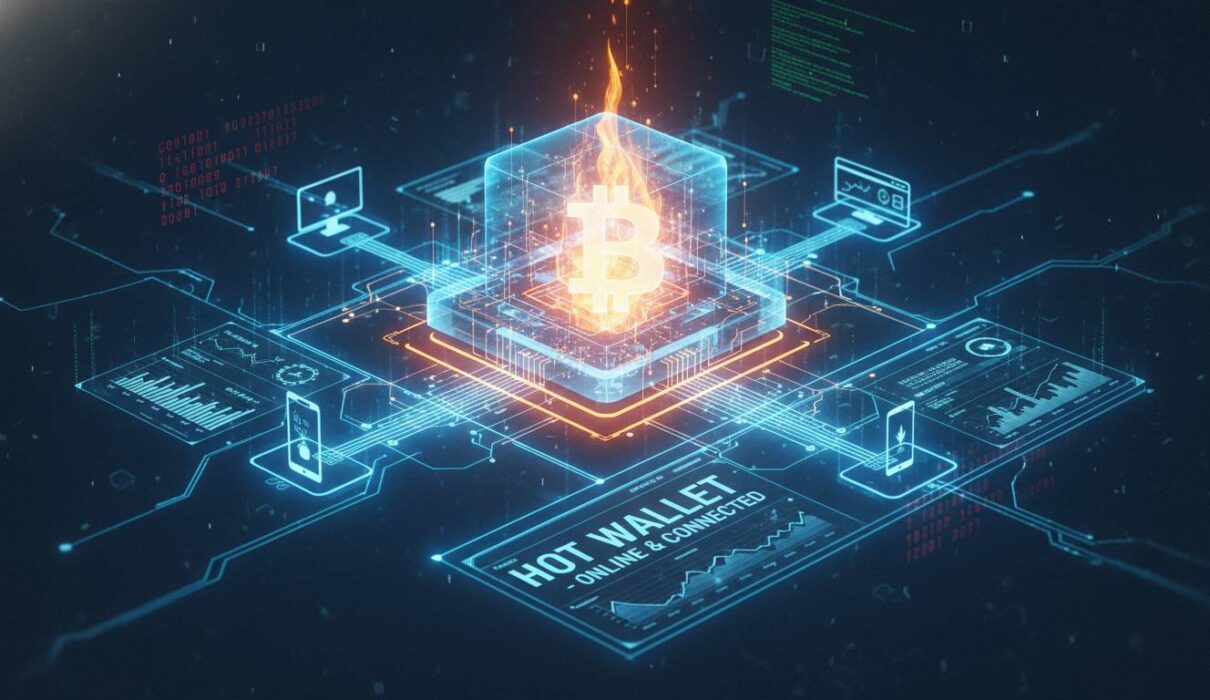
By A hot wallet is a cryptocurrency wallet connected to the internet, while a cold wallet remains offline and stores your private keys on hardware devices or paper. Hot wallets offer convenience for frequent trading but expose your funds to online threats, whereas cold wallets provide superior security for long-term storage but require additional steps to access and transact. For most cryptocurrency holders, the safest approach involves using both—keeping smaller amounts in hot wallets for daily transactions while securing the majority of assets in cold storage.
The distinction between these two wallet types represents one of the most fundamental decisions every cryptocurrency holder must make. With over $4 billion lost to crypto hacks and scams in 2023 alone, understanding the security implications of your wallet choice has never been more critical. This comprehensive guide examines the technical differences, security trade-offs, and practical considerations to help you determine which wallet type best suits your needs.
Understanding Cryptocurrency Wallets: The Basics
Before examining the differences between hot and cold wallets, it’s essential to understand what a cryptocurrency wallet actually does. Contrary to popular misconception, these wallets don’t store your digital coins directly. Instead, they store your private keys—the cryptographic strings that prove ownership of your cryptocurrency holdings and authorize transactions on the blockchain.
Your public address functions like a bank account number that others can use to send you funds, while your private key acts as the password that allows you to access and transfer those funds. The security of your cryptocurrency entirely depends on how you protect this private key. This is where the hot versus cold wallet distinction becomes crucial for your security strategy.
A hot wallet maintains your private keys in an environment connected to the internet—whether that’s a software application on your phone, a browser extension, or an exchange account. This constant connectivity enables quick and convenient transactions but simultaneously creates potential entry points for hackers and malware.
A cold wallet keeps your private keys entirely offline, typically on specialized hardware devices designed specifically for secure key storage or on paper printouts. By disconnecting from the internet, cold wallets eliminate the primary attack vector that threatens hot wallet users.
How Hot Wallets Work
Hot wallets operate through software applications that generate, store, and manage your private keys while maintaining an active internet connection. These wallets come in several forms, each with distinct characteristics and security implications.
Exchange wallets represent the most common type of hot wallet because they come built into cryptocurrency exchange platforms like Coinbase, Binance, and Kraken. When you create an account and deposit cryptocurrency, the exchange holds your private keys in their managed wallets. This arrangement offers maximum convenience—you can instantly buy, sell, or trade without any technical setup—but you sacrifice direct control over your keys. The exchange essentially holds your funds on your behalf, meaning you depend on their security measures and trustworthiness.
Software wallets provide more autonomy than exchange wallets. Applications like MetaMask, Exodus, and Trust Wallet generate and store your private keys locally on your device. You maintain full control over your keys, and the funds remain in your possession rather than the exchange’s. However, your device becomes the security weak point—if malware compromises your computer or phone, attackers can potentially extract your private keys.
Mobile wallets represent a subset of software wallets optimized for smartphone use. Apps like BlueWallet, Samourai Wallet, and Coinbase Wallet offer touch-friendly interfaces and QR code scanning for easy transactions. Their convenience makes them popular for everyday spending, though the inherent vulnerabilities of mobile devices apply.
The typical workflow for a hot wallet transaction involves opening your application, entering your password or using biometric authentication, specifying the recipient’s address and amount, and confirming the transaction. The wallet signs the transaction locally using your private key, then broadcasts it to the blockchain network. The entire process takes seconds, enabling the rapid trading that characterizes cryptocurrency markets.
How Cold Wallets Work
Cold wallets achieve their security by keeping private keys completely isolated from internet-connected environments. This isolation eliminates the possibility of remote attacks, though it introduces friction in the transaction process.
Hardware wallets are specialized physical devices that generate and store private keys in a secure element—a dedicated microchip designed to resist tampering. When you need to sign a transaction, your computer or phone prepares the transaction data and sends it to the hardware wallet. The device displays the transaction details on its own screen, allowing you to verify the information before approving it with a physical button press. The private key never leaves the device, and the signing occurs entirely offline within the device’s secure environment.
Leading hardware wallet manufacturers include Ledger, Trezor, and SafePal. These devices typically cost between $50 and $250, representing a modest investment relative to the funds they protect. The most popular models include Ledger Nano X (offering Bluetooth connectivity and mobile compatibility), Trezor Model T (featuring a touchscreen interface), and the more affordable Ledger Nano S Plus.
Paper wallets represent the most basic form of cold storage—a physical document containing your public address and private key, typically printed as QR codes. To use funds from a paper wallet, you must import or sweep the private key into a software wallet, which temporarily exposes those keys to an online environment. Paper wallets have largely fallen out of favor due to their vulnerability to physical damage, loss, and the complexity of the sweeping process.
Steel wallets address the fragility of paper by permanently engraving your recovery seed phrase onto metal plates. Products like CryptoSteel, Billfodl, and Sovereign Monkey provide fireproof and waterproof protection for your critical backup information.
The transaction process with cold storage requires additional steps. You connect your hardware wallet to a computer running the manufacturer’s software, create a transaction offline or have the device sign prepared transaction data, and then broadcast the signed transaction through an air-gapped computer or your regular computer. This multi-step process might take several minutes compared to the seconds required by hot wallets.
Security Comparison: The Core Differences
The security characteristics of hot and cold wallets derive fundamentally from their internet connectivity, with profound implications for threat exposure.
Hot wallets face multiple attack vectors that cold wallets avoid entirely. Exchange breaches have resulted in billions of dollars in losses over the years—Mt. Gox lost approximately 850,000 BTC (worth around $450 million at the time) in 2014, and more recent incidents like the Ronin Network hack ($625 million in 2022) and FTX collapse demonstrate the systemic risks of centralized holdings. Phishing attacks trick users into revealing their login credentials or private keys through fake websites and emails. Malware can record keystrokes, take screenshots, or directly target cryptocurrency applications to steal credentials. SIM swapping allows attackers to hijack phone numbers and bypass two-factor authentication.
Cold wallets eliminate these remote attack possibilities by design. Since your private keys never encounter an internet-connected environment, remote hackers cannot access them regardless of how sophisticated their attacks become. However, cold wallets introduce different security considerations. Physical theft of the device itself remains possible—though modern hardware wallets require PIN codes and passphrase protection to function even if physically stolen. Loss or damage of your device means you must rely on your recovery seed phrase, making proper backup procedures essential. Firmware vulnerabilities occasionally emerge in hardware wallet software, though manufacturers respond with security updates.
A 2023 security report from Chainalysis noted that approximately 90% of cryptocurrency stolen in hacks came from hot wallet vulnerabilities, with cold storage solutions rarely compromised through technical means. This statistic underscores the fundamental security advantage of offline storage.
Practical Use Cases and Recommendations
Understanding when to use each wallet type depends on your specific circumstances, trading frequency, and risk tolerance.
Use hot wallets when: You actively trade cryptocurrencies and need immediate access to your funds. You make frequent transactions or payments. You’re holding amounts you’re comfortable losing if a security breach occurs. You want the simplest possible user experience.
Use cold wallets when: You’re holding cryptocurrency as a long-term investment. You’re storing significant amounts that represent substantial value. Security is your primary concern. You don’t need immediate access to your funds.
The industry standard approach—often called “cold storage best practice”—involves keeping only what you need for immediate use in hot wallets while moving the bulk of your holdings to cold storage. Many experienced holders follow a rough guideline: maintain no more than 5-10% of your portfolio in hot wallets, with the remainder secured in cold storage.
For those new to cryptocurrency, the progression typically looks like this: begin with an exchange wallet for your first purchases, then migrate to a software wallet for better control, and eventually invest in a hardware wallet as your holdings grow. This graduated approach allows you to learn proper security practices while managing the complexity of self-custody.
Cost and Accessibility Considerations
The financial investment required differs significantly between wallet types.
Hot wallets are universally free. Exchange wallets require only an account, software wallets download at no cost, and mobile apps are typically free to install. Your expenses begin only when you choose to upgrade to premium features or purchase hardware.
Cold wallets require an upfront purchase. Entry-level hardware wallets like the Ledger Nano S Plus cost approximately $80, while premium models with advanced features run $150-250. This one-time investment protects your holdings indefinitely, making the cost negligible relative to the assets secured.
For German users specifically, purchasing hardware wallets from authorized resellers or directly from manufacturers ensures you receive genuine devices with full warranty coverage. German consumers benefit from strong consumer protection laws, and purchasing from established European distributors provides additional peace of mind.
Multi-Signature and Advanced Security Options
Beyond the hot versus cold distinction, cryptocurrency holders can implement additional security layers that combine elements of both approaches.
Multi-signature wallets require multiple private keys to authorize any transaction. You might set up a 2-of-3 configuration where any two of three keyholders must approve a transaction. This approach distributes risk across multiple devices or locations, protecting against single points of failure. Hardware wallet manufacturers like Ledger and Trezor support multi-signature configurations, as do software solutions like Gnosis Safe.
Time-locked vaults add temporal constraints to withdrawals. You might configure a wallet to require a 48-hour delay between initiating a withdrawal and its finalization, giving you time to cancel if unauthorized access occurs. This feature proves particularly valuable for large holdings.
Custodial solutions from established providers like Fidelity or specialized services like Copper offer institutional-grade security for those uncomfortable with self-custody. These services store cryptocurrency in geographically distributed, highly secure facilities with insurance coverage, though you again rely on a third party’s security practices.
Common Mistakes to Avoid
New cryptocurrency holders frequently make security mistakes that jeopardize their holdings.
Storing large amounts on exchanges represents the most common error. The convenience of exchange wallets tempts users to leave substantial funds where they can easily trade, but exchanges remain prime targets for hackers. Remember: not your keys, not your crypto.
Failing to back up recovery phrases properly leads to permanent loss in countless cases. Your recovery seed phrase—typically 12 or 24 words—represents the ultimate backup for your wallet. Writing it down once isn’t sufficient; you need multiple secure backups in different physical locations, protected against fire, water, and theft.
Sharing wallet information or recovery phrases with others, even supposed “support” representatives, creates immediate vulnerability. Legitimate wallet providers and exchanges will never ask for your private keys or recovery phrase.
Ignoring software updates on hot wallet applications and hardware wallet firmware creates preventable vulnerabilities. Manufacturers regularly release security patches that address newly discovered threats.
Frequently Asked Questions
Which type of wallet is safer for long-term cryptocurrency storage?
Cold wallets are significantly safer for long-term storage because they keep your private keys completely offline, eliminating remote hacking as a threat vector. Hardware wallets in particular are designed specifically for secure long-term key storage with protection against physical tampering.
Can I use both hot and cold wallets simultaneously?
Yes, this is the recommended approach for most users. Keep a small amount (typically 5-10% of your portfolio) in a hot wallet for everyday transactions and trading, while securing the majority of your holdings in cold storage. This strategy balances convenience with security.
What happens if I lose my hardware wallet?
If you lose your hardware wallet, you can recover all your funds using your recovery seed phrase (the 12 or 24 words you wrote down when setting up the device). This is why creating secure, multiple backups of your seed phrase is absolutely essential. Purchase a new hardware wallet, enter your seed phrase, and your funds will be restored.
Are hot wallets free to use?
Yes, hot wallets—including exchange wallets, software wallets, and mobile wallets—are free to download and use. However, you may encounter fees when transferring cryptocurrency in and out of exchanges or when using certain advanced features.
Do cold wallets work with all cryptocurrencies?
Most hardware wallets support the top 100-500 cryptocurrencies by market cap, including Bitcoin, Ethereum, and most major altcoins. However, some less common or newer cryptocurrencies may not have official support. Always verify compatibility with your specific assets before purchasing a hardware wallet.
Is it possible to have a hot wallet on a hardware device?
Technically no, by definition. A hardware wallet is a cold wallet because it stores keys offline. However, some hardware wallets (like the Ledger Nano X) offer “hot” functionality through companion apps that connect to the internet while keeping private keys isolated within the device’s secure element. This provides convenience without compromising the fundamental security architecture.