
 By
By Buying Bitcoin has evolved from a niche technical hobby into a mainstream financial activity, with millions of Germans now holding cryptocurrency. Whether you’re looking to make your first purchase or understand the landscape better, this guide walks you through every step of acquiring Bitcoin in Germany—from choosing the right platform to securing your first holdings.
Key Insights
– Over 4 million Germans own Bitcoin, making Germany one of Europe’s largest crypto markets
– German law treats Bitcoin as private money, not currency, meaning profits are tax-free after one year
– Licensed German exchanges offer SEPA bank transfers and full BaFin compliance
– The process takes 15-30 minutes for verification, then instant Bitcoin delivery
Why Germans Are Buying Bitcoin in 2024
Germany has emerged as one of Europe’s most crypto-friendly jurisdictions. The country’s regulated approach through the Federal Financial Supervisory Authority (BaFin) provides investor protections while allowing innovation. Unlike some countries that restrict cryptocurrency, Germany actively licenses crypto service providers, creating a secure environment for buyers.
The reasons driving German adoption span both investment and philosophical motivations. Many view Bitcoin as a hedge against euro inflation, particularly given the European Central Bank’s monetary policy. Others appreciate Bitcoin’s decentralized nature—a currency controlled by no government or corporation. The 2021 cryptocurrency boom brought significant mainstream attention, and subsequent market corrections have attracted value-conscious buyers entering at lower price points.
German investors also benefit from clear tax treatment. Since 2021, Bitcoin and other cryptocurrencies are classified as private money in Germany. This means capital gains are tax-free if you hold your Bitcoin for more than one year before selling. Short-term gains remain subject to income tax, but the one-year holding period provides a clear strategy for tax-efficient investing.
Choosing the Right Bitcoin Exchange in Germany
Selecting your purchase platform is the most critical decision in your Bitcoin journey. The right exchange makes the process smooth and secure; the wrong one creates unnecessary friction or even risk.
German-Regulated Exchanges
For maximum security and legal compliance, consider platforms licensed by BaFin. Bitbond was one of the first German platforms to receive BaFin approval, offering Bitcoin purchases through SEPA transfers with full regulatory protection. Bitcoin.de, operated by Bitcoin Deutschland GmbH, is Germany’s longest-running Bitcoin exchange and integrates directly with German banks. These platforms require full identity verification (KYC compliance) but provide strong investor protections.
International Exchanges Serving Germany
Many Germans use established international platforms that serve the German market. Coinbase offers German language support, SEPA deposits, and a user-friendly interface suitable for beginners. Kraken provides advanced trading features alongside simple buying options, with competitive fees for larger volumes. Binance serves German users with German-language support and various deposit methods including Sofort and Giropay.
Comparison Factors
| Factor | What to Look For |
|---|---|
| Fees | Trading fees typically 0.1-1.5%, spread costs vary |
| Payment Methods | SEPA (free), credit card (2-4%), instant transfer |
| Verification Time | 15 minutes to 3 days depending on platform |
| Security Features | Two-factor authentication, cold storage, insurance |
| Withdrawal Options | To personal wallet, SEPA, other crypto |
For your first purchase, prioritize simplicity over advanced features. Coinbase, Kraken, and Bitcoin.de all offer streamlined “buy” interfaces requiring just a few clicks once verified.
Step-by-Step: Opening Your Account and Buying Bitcoin
The actual process of purchasing Bitcoin follows a consistent pattern across most exchanges. Understanding each step helps you navigate efficiently and avoid common pitfalls.
Step 1: Account Registration
Begin by visiting your chosen exchange website or downloading their app. Registration requires an email address and password meeting basic security criteria. Choose a strong, unique password—consider using a password manager. After submitting your details, verify your email through the confirmation link sent to your inbox.
Step 2: Identity Verification (KYC)
German regulations require all licensed exchanges to verify customer identity. This process, known as Know Your Customer (KYC), typically involves uploading a government-issued ID (passport, driver’s license, or national ID card) and proof of residence. Some platforms accept German Meldebescheinigung (registration certificate) as address proof.
The verification timeline varies significantly: automated systems may approve you within minutes, while manual review can take several days. During high-demand periods, expect delays. Have your documents ready before starting the process to move quickly.
Step 3: Funding Your Account
With your account verified, you need to deposit euros. SEPA bank transfers are the most popular method for Germans—they’re free and typically arrive within one business day. To make a SEPA deposit, navigate to the deposit section, select “SEPA” or “EU Bank Transfer,” and copy the provided IBAN and BIC details. Add your exchange username as the transfer reference to ensure proper crediting.
Credit and debit card deposits offer instant funding but come with 2-4% fees. Instant bank transfers through services like Sofort or Giropay provide a middle ground—faster than SEPA but cheaper than cards. For your first purchase, SEPA is usually optimal unless you need immediate access.
Step 4: Placing Your Bitcoin Order
Now you’re ready to buy Bitcoin. Most exchanges offer two order types: market orders execute immediately at the current price, while limit orders let you specify your desired price and wait for the market to reach it.
For beginners, market orders make sense—you get Bitcoin instantly at the displayed price. Simply enter the amount in euros you want to spend or the amount of Bitcoin you wish to purchase. Review the total including fees, then confirm. Within seconds to minutes, Bitcoin arrives in your exchange wallet.
Step 5: Securing Your Bitcoin
Here’s an important principle: not your keys, not your crypto. When Bitcoin sits in your exchange wallet, you don’t truly control it—you’re trusting the exchange to hold it for you. For security, especially with larger amounts, transfer your Bitcoin to a personal wallet.
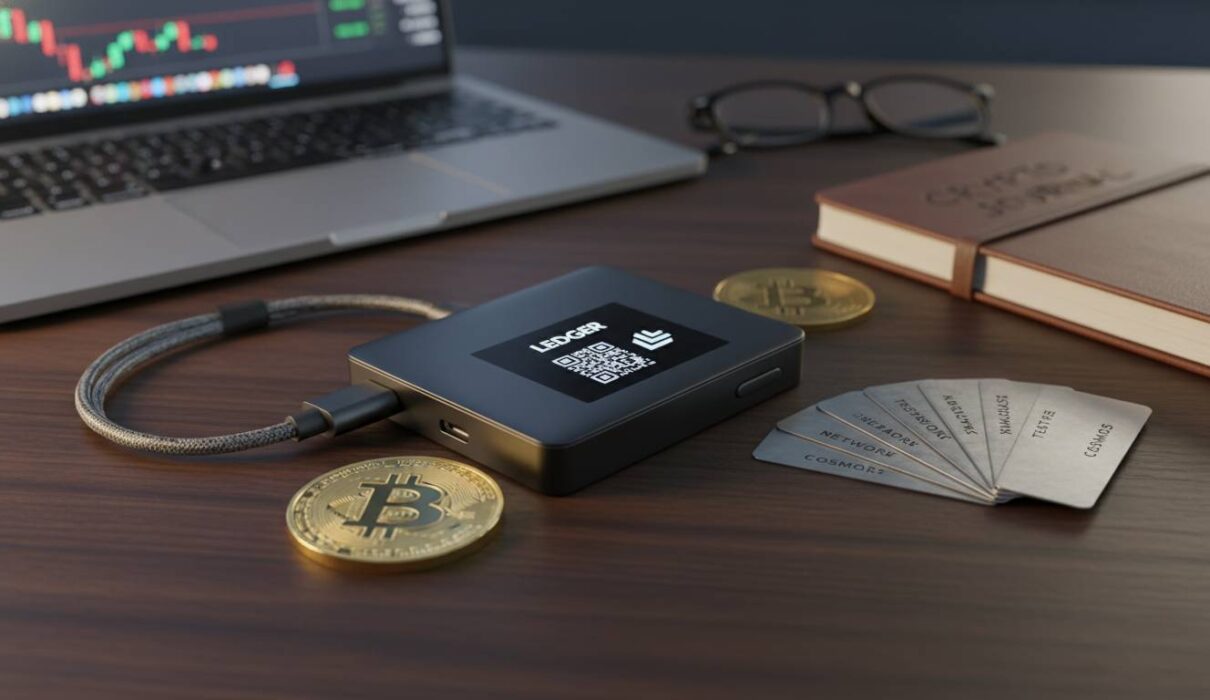
Software wallets like BlueWallet or Electrum run on your phone or computer and give you full control. Hardware wallets like Ledger or Trezor store your private keys offline, providing the highest security against hacking. For beginners, a small amount on exchange for easy selling, combined with a hardware wallet for long-term holding, represents a balanced approach.
Understanding Bitcoin Wallets
Your Bitcoin wallet doesn’t actually store Bitcoin—it stores your private keys, which prove ownership of your Bitcoin on the blockchain. Understanding wallet types helps you make informed security decisions.
Hot Wallets (Connected to Internet)
Exchange wallets and mobile apps qualify as hot wallets. They’re convenient for frequent trading but carry online security risks. Major exchanges maintain robust security, but they’re potential targets for hackers. Keep only trading amounts in hot wallets.
Cold Wallets (Offline Storage)
Hardware wallets like Ledger and Trezor keep your private keys completely offline. Even if your computer is compromised, your Bitcoin remains secure. These devices cost €50-150 but provide peace of mind for holdings exceeding a few hundred euros.
Paper Wallets
For maximum simplicity, you can print your private keys as a paper document. While archaic, paper wallets immune to digital theft. However, they’re vulnerable to physical loss, damage, or degradation. If using paper wallets, create multiple copies stored in separate secure locations.
German Tax Rules for Bitcoin Purchases
Understanding German tax implications helps you optimize your strategy and avoid surprises come tax season.
Holding Period: Bitcoin sold after being held for more than one year triggers no capital gains tax. This provides a clear incentive for long-term holding.
Annual Exemption: Germans receive a €600 annual exemption on capital gains from private sales. This applies to total cryptocurrency gains across all transactions, not per asset.
Business Activity: If you trade Bitcoin as a business or professional activity, different rules apply—gains count as income rather than capital gains. The boundary depends on frequency, organization, and profit motive.
Mining and Staking: Rewards from mining or staking count as income at their fair market value when received, then potentially qualify for capital gains treatment after the one-year holding period.
For most casual buyers holding as an investment, the strategy is straightforward: buy, hold for over a year, and pay no tax on gains when you eventually sell.
Common Mistakes to Avoid
New Bitcoin buyers frequently make avoidable errors that create unnecessary risk or cost.
Mistake #1: Buying Through Unregulated Platforms
Some platforms offer below-market Bitcoin prices—these are almost always scams. Legitimate exchanges set prices close to market rate. If an offer seems too good to be true, it’s fraud.
Mistake #2: Ignoring Security Basics
Failing to enable two-factor authentication, using simple passwords, or storing large amounts on exchanges creates preventable risk. Enable 2FA immediately, use unique passwords, and move significant holdings to personal wallets.
Mistake #3: Investing More Than You Can Afford
Bitcoin remains volatile—prices can drop 50% or more during market downturns. Never invest money you need for essentials or that you’d need to sell during a downturn.
Mistake #4: Ignoring Transaction Fees
Each Bitcoin transaction includes fees that vary with network congestion. Small purchases may incur proportionally high fees. For small amounts, some exchanges allow small recurring purchases that average out costs.
Mistake #5: Not Backing Up Wallet Seeds
Your recovery seed (usually 12 or 24 words) is the only way to recover wallet access if you lose your device. Write it down on paper, store it securely, never share it online.
How Much Should You Invest in Bitcoin?
Determining your ideal Bitcoin investment depends on your financial situation, goals, and risk tolerance.
Starting Considerations
A common guideline suggests investing only what you can afford to lose entirely. Bitcoin remains risky—its price history includes multiple 80% declines. That said, many investors view small positions as worthwhile “asymmetric bets” with significant upside potential.
Investment Approaches
Lump Sum: Investing a single amount at once. Historically, lump sum investing outperforms dollar-cost averaging about two-thirds of the time, but requires comfortable timing the market.
Dollar-Cost Averaging (DCA): Buying small fixed amounts regularly (weekly or monthly). This removes timing stress and averages out price volatility. Many Germans set up automatic SEPA transfers to buy €50-200 monthly.
Percentage Allocation: Many financial advisors suggest limiting cryptocurrency to 1-5% of a diversified portfolio. This provides upside exposure while keeping overall risk manageable.
The Future of Bitcoin in Germany
Looking ahead, several trends may affect German Bitcoin buyers.
Regulatory Clarity: The EU’s MiCA (Markets in Crypto-Assets) regulation, fully effective in 2024-2025, creates unified European rules. Germany will implement these alongside existing BaFin guidance, potentially increasing consumer protection while reducing regulatory fragmentation.
Institutional Adoption: German banks and investment funds increasingly offer cryptocurrency products. Some German banks now permit Bitcoin custody, and pension funds have begun exploring crypto allocations.
Technology Improvements: The Bitcoin network continues developing. The Lightning Network enables faster, cheaper transactions for everyday payments. These improvements may expand Bitcoin’s utility beyond investment into actual currency use.
Frequently Asked Questions
Is Bitcoin legal in Germany?
Yes, Bitcoin is completely legal in Germany. It’s classified as private money (Privat geld) rather than currency, but owning, buying, selling, and using Bitcoin is fully legal. German law provides clear tax treatment, and BaFin licenses cryptocurrency service providers.
What is the minimum amount of Bitcoin I can buy?
Most exchanges allow purchases starting at €10 or even €1. Some have slightly higher minimums of €25. You can buy fractions of Bitcoin (satoshi—one hundred millionth of a Bitcoin), so even small amounts are meaningful.
Are German Bitcoin exchanges safe?
Licensed German exchanges like Bitcoin.de and Bitbond operate under BaFin supervision, providing strong investor protections. International platforms like Coinbase and Kraken also serve Germany with strong security track records. Always enable two-factor authentication regardless of which platform you choose.
How long does it take to buy Bitcoin in Germany?
Account verification takes 15 minutes to 3 days. SEPA deposits typically arrive within one business day. Once your account is funded, purchasing Bitcoin executes instantly. Total time for a first purchase: typically 2-5 business days, faster with instant payment methods.
Do I have to pay taxes on Bitcoin in Germany?
Bitcoin sales are tax-free if you held the Bitcoin for more than one year before selling. Short-term gains (within one year) count as income and are taxed at your income tax rate. There’s also a €600 annual exemption for gains from private sales.
Should I store my Bitcoin on the exchange or in a personal wallet?
For beginners, keeping a small amount on the exchange for easy access is reasonable. However, for any significant value (€500+), transferring to a personal wallet provides much better security. Hardware wallets cost €50-150 and represent the best balance of security and usability.
Conclusion
Buying Bitcoin in Germany has never been easier or safer. The combination of BaFin-licensed exchanges, clear tax rules, and established infrastructure creates an accessible entry point for anyone interested in cryptocurrency. The process—from account creation through first purchase—typically takes less than a week, with most time spent on identity verification.
Start by choosing a reputable exchange, completing your verification, and making a small initial purchase to learn the process. Enable all security features, and as your holdings grow, consider transferring to a personal hardware wallet. Remember the tax advantage of holding for more than one year, and never invest more than you can afford to lose.
Bitcoin remains volatile and speculative, but for Germans seeking exposure to this groundbreaking asset class, the path forward is now well-established and increasingly mainstream.