
 By
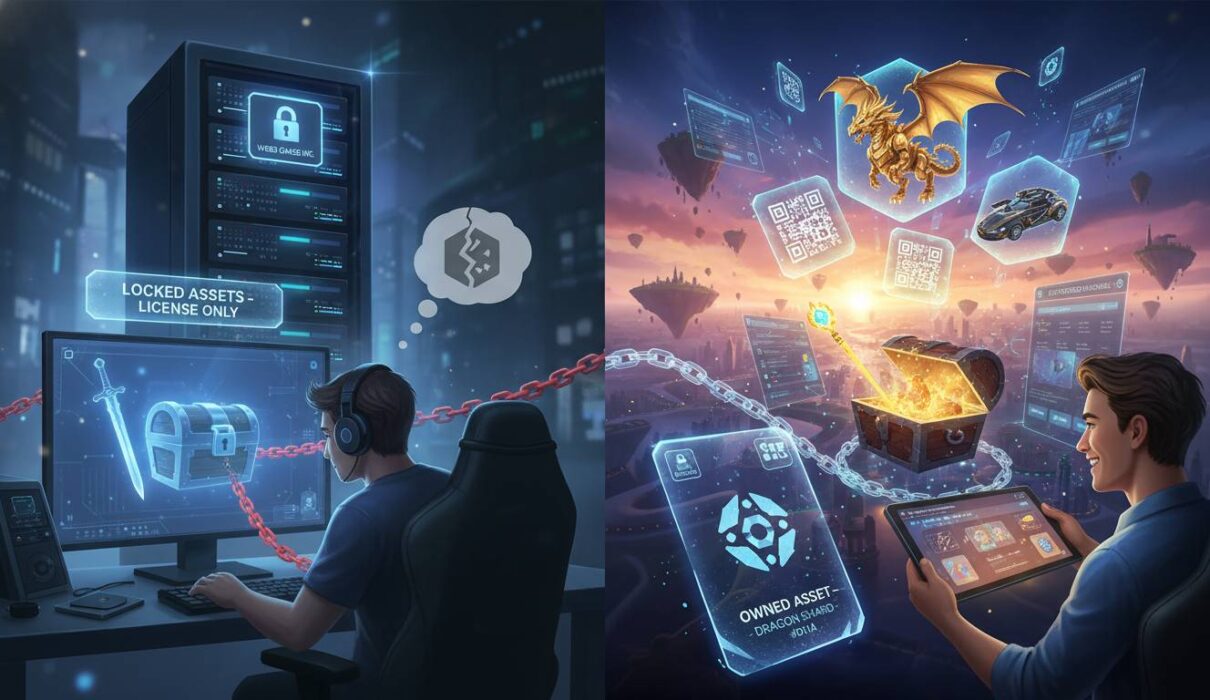
By Web3 gaming represents a fundamental shift in how players interact with digital games, introducing true ownership of in-game assets, interoperability between gaming ecosystems, and new economic models that reward players for their time and investment. Unlike traditional games where developers retain complete control over all assets and economies, Web3 gaming leverages blockchain technology to create decentralized, player-driven ecosystems where virtual items can truly belong to the individual rather than the platform.
This transformation extends beyond mere ownership—it reshapes the entire relationship between players, developers, and the games themselves. Players can now earn tangible value through gameplay, trade assets across different platforms, and participate in governance decisions that shape the games they love. The implications extend to game development funding, where blockchain enables new models like play-to-earn and community-owned development studios.
The Evolution: From Traditional Gaming to Web3
The gaming industry has undergone dramatic transformations over the past four decades, each bringing new possibilities while maintaining certain fundamental structures. Traditional gaming, from arcade cabinets to modern consoles, operates on a centralized model where publishers and developers control every aspect of the player experience. Players purchase licenses to play, and any items or progress earned within those games remain entirely under the control of the game’s operator.
This model began shifting with the rise of free-to-play games in the early 2000s, which introduced virtual economies where players could purchase cosmetic items and advantages with real money. Games like World of Warcraft and League of Legends demonstrated that players would spend significant amounts on virtual goods, creating multi-billion dollar industries around in-game transactions. However, even these economies remained fully controlled by the game’s operators, who could arbitrarily modify, remove, or devalue any item at any time.
Web3 gaming emerges from this trajectory as a response to these limitations. The technology stack—blockchain, smart contracts, and decentralized protocols—enables a fundamentally different relationship between players and games. When an item exists on a blockchain, it cannot be arbitrarily deleted or modified by any single entity. When a game implements decentralized governance, players gain a voice in decisions that affect their experience. This shift represents not merely a technical change but a philosophical one about who holds power in gaming ecosystems.
Core Technologies Powering Web3 Gaming
Understanding Web3 gaming requires grasping the technological foundations that make it possible. Three interconnected technologies form the backbone of this revolution: blockchain networks, non-fungible tokens, and cryptocurrency tokens.
Blockchain Networks
Blockchain technology provides the foundational infrastructure for Web3 gaming. These distributed ledgers record transactions and asset ownership across thousands of computers worldwide, creating a system where no single entity controls the record of ownership. For gaming, this means that when a player acquires an in-game item recorded on a blockchain, that ownership is permanent and verifiable by anyone.
Different blockchain networks offer various trade-offs for gaming applications. Ethereum, as the first smart contract platform, boasts the largest ecosystem of games and the most developed infrastructure, though it has faced criticism for high transaction fees during peak usage. Polygon and Solana have emerged as popular alternatives for gaming, offering significantly lower transaction costs and faster confirmation times that make small-value transactions economically viable. Binance Smart Chain, Immutable X, and other networks continue developing gaming-specific solutions.
Non-Fungible Tokens
Non-fungible tokens represent unique digital items that cannot be exchanged on a one-to-one basis with identical items—each NFT has distinct properties and cannot be replicated. In gaming contexts, NFTs can represent characters, weapons, cosmetic skins, land parcels, or any other in-game asset that players might want to own truly.
The distinction between traditional in-game items and NFT-based items lies in portability and permanence. A traditional game skin exists only within that specific game and can be modified or removed by developers at any time. An NFT-based skin, by contrast, exists independently of any single game and can potentially be used or displayed across different applications that support the same standards. This interoperability, though still developing, represents one of Web3 gaming’s most transformative possibilities.
Utility Tokens
Beyond NFTs, many Web3 games incorporate cryptocurrency tokens that serve various functions within the game economy. These tokens can reward players for achievements, enable governance voting, grant access to exclusive content, or serve as in-game currency. The play-to-earn model that has generated significant attention and controversy relies heavily on these tokens, allowing players to earn value through gameplay that can be exchanged for real money.
The design of token economies varies significantly across games. Some implementations create sustainable loops where tokens earned through gameplay can be spent on improvements or cosmetics within the game. Others have faced criticism for resembling pyramid schemes, where early players profit primarily from the efforts of later participants. Understanding the specific tokenomics of any Web3 game requires examining how tokens are distributed, how they retain value, and what utility they provide.
How Web3 Gaming Works: The Player Experience
The practical experience of playing a Web3 game differs from traditional gaming in several key ways, particularly around account creation, asset management, and the economic aspects of gameplay.
Wallets and Authentication
Rather than creating accounts through traditional username and password systems, Web3 games typically connect through cryptocurrency wallets. These wallets, such as MetaMask, Phantom, or Coinbase Wallet, store the player’s private keys—the cryptographic credentials that prove ownership of blockchain assets. When a player connects their wallet to a game, the game can verify which assets they own without requiring them to transfer those assets anywhere.
This wallet-based authentication also means that players retain their assets regardless of whether a particular game continues operating. If a traditional game shuts down, players lose access to everything they purchased. If a Web3 game shuts down, the NFT assets remain in the player’s wallet, potentially usable in other games or simply held as collectibles.
True Ownership and Trading
One of Web3 gaming’s most compelling features involves true ownership of in-game assets. When a player purchases or earns an NFT item in a Web3 game, that item exists in their wallet, not on the game’s servers. Players can view their complete inventory by checking their wallet address on a blockchain explorer, and they can transfer these items to other players directly without requiring the game’s platform as an intermediary.
This direct peer-to-peer trading opens significant possibilities for players. Secondary markets allow collectors to specialize in rare items while players who prefer gameplay over collecting can liquidate their holdings. The transparency of blockchain transactions means players can verify the authenticity and rarity of any item before purchasing. However, this openness also introduces risks, including scams, fraud, and the potential for significant financial losses.
Play-to-Earn Economics
The play-to-earn model represents perhaps Web3 gaming’s most radical departure from traditional gaming economics. In conventional games, players spend money to access entertainment, with any items or currency earned remaining locked within the game’s ecosystem. Play-to-earn games invert this model, allowing players to earn cryptocurrency or NFT rewards that hold real-world value.
The economic implications of this model have generated substantial debate. Proponents argue that play-to-earn empowers players, particularly in regions with fewer economic opportunities, by allowing them to earn value through skills and time investment. Critics point out that many play-to-earn games resemble gambling mechanics, that token values often collapse dramatically, and that the games themselves sometimes prioritize token economics over engaging gameplay.
Successful implementations of play-to-earn mechanics typically focus on creating genuine gameplay value alongside economic rewards. Axie Infinity, one of the most prominent early examples, required players to purchase expensive NFT characters before they could start earning, leading to criticism that the game resembled a pay-to-earn scheme rather than genuinely rewarding player skill. Later games have experimented with various approaches to balance accessibility, reward, and sustainable economics.
Benefits and Opportunities in Web3 Gaming
The structural changes brought by Web3 technology create several distinct advantages that differentiate these games from traditional alternatives, though these benefits come with important caveats and limitations.
Player Empowerment and Ownership
The most fundamental benefit of Web3 gaming involves genuine player ownership of in-game assets. This ownership extends beyond mere possession to include the ability to sell, trade, or transfer items without developer permission. Players who invest hundreds of hours into a game or spend money acquiring rare items gain actual property rights rather than revocable licenses.
This empowerment also includes governance rights in some games. Decentralized autonomous organizations enable players to vote on game development decisions, parameter changes, or treasury allocation. While the effectiveness and genuine influence of these governance systems varies widely, they represent a structural shift in the relationship between players and game operators.
New Economic Models and Opportunities
Web3 gaming has created entirely new categories of economic opportunity. Beyond play-to-earn gameplay, the ecosystem supports professional traders, collectors, guilds, and service providers. Players can now earn income through activities like renting out NFT assets to other players, providing gameplay services, or trading items on secondary markets.
These opportunities have been particularly significant in developing economies, where Web3 gaming has provided income sources in regions with limited traditional employment options. Games like Axie Infinity developed particularly strong player bases in the Philippines and other Southeast Asian countries, where players could earn amounts comparable to or exceeding local wages. However, the volatile nature of cryptocurrency values means these opportunities carry substantial risk.
Developer Funding and Innovation
Blockchain technology enables new funding models for game development that bypass traditional publishing structures. Initial Game Offerings, similar to Initial Coin Offerings, allow developers to raise capital directly from potential players. These fundraising events can provide development funding while building an invested community of early supporters who receive tokens or NFTs in return.
This model has accelerated development of games that might not find backing through traditional channels, enabling experimental concepts and smaller teams to bring ambitious projects to market. However, the lack of traditional gatekeeping also means that scams and failed projects are common, and players should exercise significant caution before investing in early-stage Web3 games.
Challenges, Risks, and Criticisms
The Web3 gaming space faces substantial challenges and legitimate criticisms that potential participants should understand before engaging with these platforms.
Environmental Concerns
Blockchain networks, particularly those using proof-of-work consensus mechanisms, consume significant amounts of energy. Ethereum’s transition to proof-of-stake reduced its energy consumption by approximately 99.95%, but concerns about the environmental impact of cryptocurrency mining persist across the industry. Players concerned about climate impact should research which networks their games operate on and consider the broader implications of their participation.
Financial Risks and Scams
The Web3 gaming space has attracted significant fraud, including rug pulls where developers abandon projects after collecting investor funds, pump-and-dump schemes manipulating token prices, and widespread scams targeting unsuspecting users. The anonymous nature of blockchain transactions means that victims often have little recourse when funds are stolen.
Beyond fraud, the fundamental volatility of cryptocurrency markets means that even legitimate games can see their token values collapse dramatically. Players should never invest more than they can afford to lose and should approach Web3 gaming primarily as entertainment rather than investment.
Regulatory Uncertainty
The regulatory landscape surrounding Web3 gaming remains unclear in most jurisdictions. Questions about whether tokens constitute securities, how gambling regulations apply to play-to-earn mechanics, and what consumer protections apply to NFT transactions all remain largely unanswered. Players in Germany and other jurisdictions should understand that their participation in Web3 gaming may carry legal implications they have not considered.
User Experience Barriers
The technical complexity of Web3 gaming presents significant barriers to mainstream adoption. Managing cryptocurrency wallets, understanding gas fees, securing private keys, and navigating blockchain explorers all require technical knowledge that the average gamer does not possess. While user experience has improved dramatically since the early days of Web3 gaming, significant gaps remain between Web3 and traditional gaming accessibility.
The Current Landscape: Notable Web3 Games and Platforms
The Web3 gaming ecosystem has grown substantially since the breakthrough success of CryptoKitties in 2017 demonstrated blockchain’s potential for gaming applications. Several categories of games have emerged, each emphasizing different aspects of Web3 technology.
| Category | Examples | Primary Web3 Feature |
|---|---|---|
| NFT Collectibles | CryptoKitties, Axie Infinity | Unique digital pets/characters |
| MMORPGs | Illuvium, The Sandbox | Open worlds with player-owned land |
| Trading Card Games | Gods Unchained, Splinterlands | Tradable NFT cards |
| Move-to-Earn | StepN, Genopets | Real-world activity rewards |
| Strategy Games | Axie Infinity, Thetan Arena | Competitive gameplay with rewards |
Axie Infinity dominated the early Web3 gaming space, reaching peak daily active users exceeding 2 million and generating billions in transaction volume. The game’s success inspired hundreds of subsequent projects, though many struggled to replicate its model and several collapsed spectacularly. The space has matured considerably since the speculative peak of 2021-2022, with current projects generally emphasizing better gameplay mechanics and more sustainable economic models.
The Future of Web3 Gaming
Looking ahead, Web3 gaming technology continues developing rapidly, with several trends likely to shape the industry’s evolution over the coming years.
Interoperability represents perhaps the most significant long-term opportunity. The vision of players using their NFT characters or items across multiple games—carrying their achievements and identities from one world to another—remains largely unrealized but continues driving development efforts. Standards like the ERC-655 token standard are making progress toward enabling richer, more portable NFT identities.
Traditional gaming companies have begun exploring Web3 technology despite initial resistance. Major publishers including Ubisoft, Square Enix, and others have launched blockchain-based initiatives, though often to mixed reception from core gaming audiences. The entry of established game companies could significantly accelerate mainstream adoption while potentially centralizing aspects of the Web3 gaming ecosystem.
Scalability solutions continue improving, enabling more complex games to operate on blockchain infrastructure. Layer 2 solutions and alternative blockchain networks specifically designed for gaming are reducing transaction costs and confirmation times to levels suitable for fast-paced gameplay. These technical improvements address one of the most significant barriers to Web3 gaming’s mainstream success.
Frequently Asked Questions
Is Web3 gaming the same as blockchain gaming?
Web3 gaming and blockchain gaming are closely related terms that are often used interchangeably. Both refer to games that incorporate blockchain technology, NFTs, or cryptocurrency. Web3 emphasizes the broader philosophical shift toward decentralization and player ownership, while blockchain gaming focuses more specifically on the technical implementation.
Can you lose money playing Web3 games?
Yes, Web3 gaming carries significant financial risk. The value of cryptocurrency and NFTs can decline dramatically or become worthless. Additionally, many Web3 games require initial investment to purchase NFTs or tokens before you can start earning. Players should treat any money spent on Web3 gaming as money they may lose entirely.
Do you need cryptocurrency to play Web3 games?
Most Web3 games require some cryptocurrency to get started, whether for purchasing initial NFTs, paying transaction fees, or funding a wallet. Some games have implemented free-to-play models that provide starter assets or cover gas fees, but the majority still require some cryptocurrency investment.
Are Web3 games actually fun to play?
This varies significantly by game. Some Web3 games offer genuinely engaging gameplay experiences, while others prioritize economic mechanics over entertainment value. The best Web3 games generally feature compelling gameplay as the foundation, with blockchain elements enhancing rather than replacing the entertainment aspect.
Are Web3 games legal in Germany?
The legal status of Web3 gaming in Germany involves complex considerations around cryptocurrency regulation, securities law, and consumer protection. While playing games is generally legal, activities involving earning, trading, or investing in tokens may have tax implications or regulatory considerations. Players should consult current regulations and potentially seek legal advice.
Conclusion
Web3 gaming represents a meaningful technological and philosophical shift in how digital games can function, offering players genuine ownership of their in-game assets, new economic opportunities, and governance participation that has no true parallel in traditional gaming. The underlying technologies—blockchain, NFTs, and decentralized protocols—enable experiences that were previously impossible, from truly portable digital collectibles to community-owned game worlds.
However, the space remains early in its development and carries substantial risks. Volatile token values, widespread fraud, regulatory uncertainty, and technical barriers all challenge mainstream adoption. The most successful approach for interested players involves careful research, conservative investment, and realistic expectations about both the opportunities and limitations of current Web3 gaming technology.
The future likely holds continued evolution rather than wholesale transformation of the gaming industry. As technical barriers decrease and user experience improves, more players may find value in the ownership and economic possibilities that Web3 gaming provides. Yet the fundamental question remains open: whether the decentralized, ownership-focused model will ultimately appeal to mainstream gaming audiences or remain a niche defined primarily by economic incentive rather than entertainment value itself.